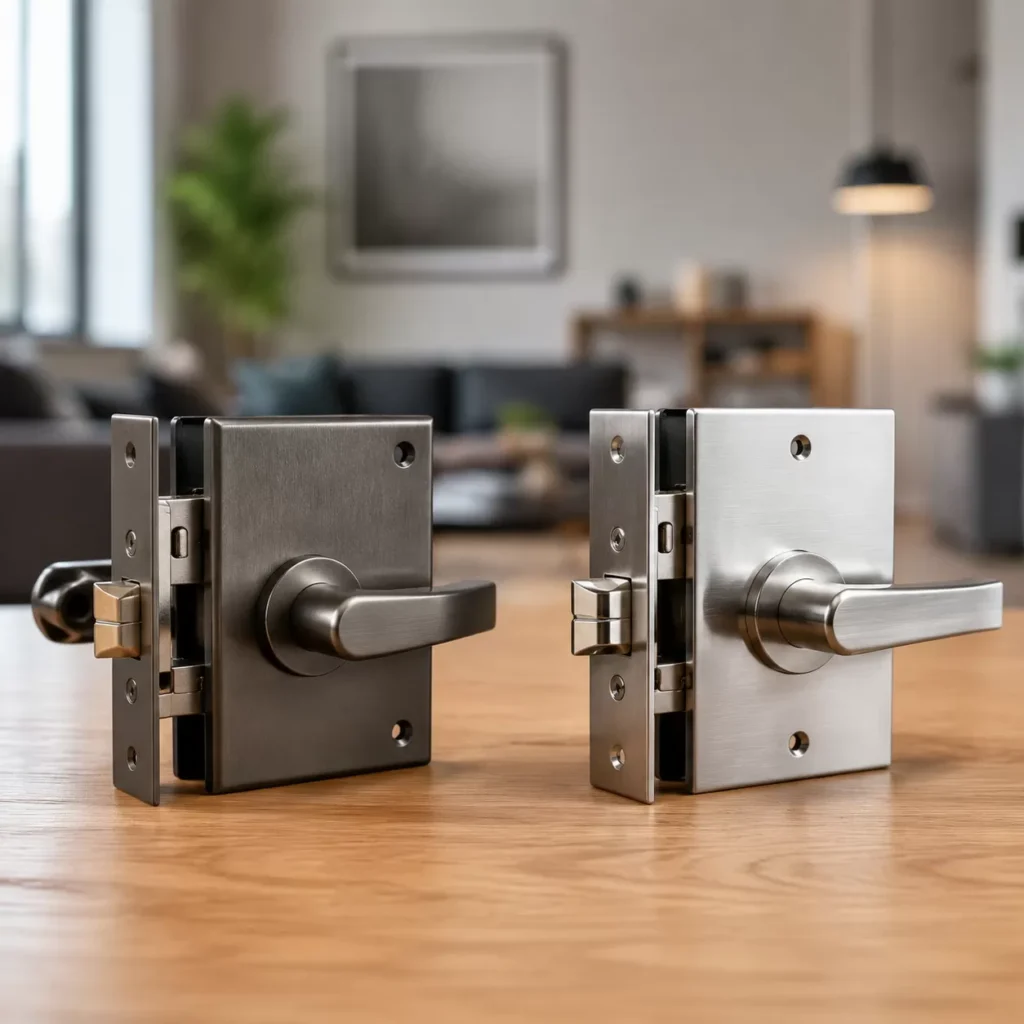
Understanding Zinc Alloy in Smart Lock Manufacturing
When evaluating Zinc Alloy vs Stainless Steel: Smart Lock Hardware Quality, understanding the core materials is the critical first step. For many commercial buyers and distributors, zinc alloy stands out as a highly versatile foundation for modern electronic door hardware.
The Die-Casting Process Advantage
Zinc alloy is celebrated in the lock engineering industry for its incredible fluidity when melted. This unique characteristic provides a distinct advantage when creating die-casting smart lock housing.
- Intricate and Seamless Designs: We can mold zinc into complex geometric shapes, allowing for sleek, gap-free exteriors that effortlessly house advanced electronic components.
- High-Volume Efficiency: The die-casting process allows for rapid, consistent mass production. This makes zinc alloy an incredibly efficient and scalable choice for an OEM smart lock factory catering to custom B2B orders.
Pros and Cons of Zinc Alloy Hardware
To make an informed decision on smart lock manufacturing materials, it is essential to objectively weigh the capabilities of zinc.
The Pros:
- Cost-Effective Production: Offers excellent manufacturing value for bulk buyers without sacrificing a premium, heavy-duty feel.
- Highly Customizable: Easily molded to meet strict architectural and modern design requirements.
- Excellent Weight-to-Strength Ratio: Provides a solid, dense structure that reassures users of the lock\’s physical security.
- Versatile Finishing: Takes exceptionally well to various surface treatment processes, allowing for a wide array of beautiful, market-ready aesthetics.
The Cons:
- Lower Inherent Corrosion Resistance: While zinc alloy door lock durability is impressive for general use, its raw state has lower natural resistance to rust compared to premium steel. It relies heavily on high-quality secondary surface coatings to withstand extreme, moisture-heavy outdoor environments.
The Power of Stainless Steel Smart Locks
When maximum security is the priority, stainless steel is the undisputed heavyweight champion of Smart Lock Hardware Quality. Its unmatched material tensile strength makes it the gold standard for high-security environments and vandal resistance. If your project demands a lock that can easily withstand brute-force attacks and extreme physical stress, this is the material you need. As a trusted high-security smart lock supplier, we rely on stainless steel to provide the ultimate physical barrier for commercial-grade applications.
Pros and Cons of Stainless Steel Hardware
Choosing stainless steel for your smart lock manufacturing materials comes with specific trade-offs. Here is exactly what you need to consider:
The Advantages:
- Exceptional Natural Corrosion Resistance: It naturally fights off rust and harsh weather, making it highly reliable in tough outdoor environments.
- Extreme Durability: Built to survive years of heavy daily use and intentional abuse.
- Premium Feel: The dense, heavy weight of the metal offers a high-end touch that users instantly associate with premium security.
The Disadvantages:
- Harder to Machine and Mold: The sheer toughness of stainless steel makes it difficult to cast into intricate designs. Complex geometric shapes take more time and specialized equipment to produce.
- Higher Production Costs: Both the raw material itself and the labor-intensive machining process drive up the overall manufacturing expenses compared to softer alloys.
Zinc Alloy vs Stainless Steel: Which Material Wins?
When evaluating smart lock hardware quality, pitting zinc alloy against stainless steel comes down to environment, security needs, and aesthetics. We test these materials rigorously to ensure maximum performance in the field.
Weathering and Corrosion Resistance
Environment dictates your material choice. In standard urban settings, zinc alloy performs exceptionally well. However, in harsh coastal areas with high salt exposure, stainless steel is the definitive winner due to its natural properties. Stainless steel naturally creates superior corrosion-resistant door hardware, ensuring anti-rust electronic door locks remain functional and visually appealing despite extreme weather.
Security and Impact Resistance
Security fundamentally depends on material tensile strength in security locks. Stainless steel offers unmatched resistance to brute-force attacks, making it the gold standard for commercial grade smart lock hardware. Zinc alloy is highly durable and easily meets standard residential requirements, but yields earlier under extreme mechanical stress. Whether you are outfitting residential doors or operating as a high-security smart locker company, matching the tensile threshold to your threat level is critical.
Surface Treatments and PVD Coating
Surface treatment levels the playing field. Physical Vapor Deposition (PVD) coating for smart locks significantly enhances both materials. This process provides incredible scratch resistance, anti-fading properties, and premium, flawless finishes. By applying advanced smart lock surface treatment processes, we ensure zinc alloy door lock durability easily handles everyday wear and tear while looking exactly like premium steel.
Quick Hardware Comparison
| Feature | Zinc Alloy | Stainless Steel |
|---|---|---|
| Corrosion Resistance | Moderate (Excellent with PVD) | Maximum (Natural) |
| Material Tensile Strength | High | Extreme |
| Design Flexibility | Exceptional | Moderate |
| Best Environment | Urban / Residential / Indoor | Coastal / Commercial / Outdoor |
How to Choose the Right Material for Your Project
Selecting between zinc alloy and stainless steel dictates your overall smart lock hardware quality, functionality, and market positioning. As a B2B smart lock manufacturer, we look at three primary factors when advising our global clients: application, budget, and deployment environment.
Residential vs. Commercial Applications
The intended use case usually narrows down your material choices immediately. For modern residential properties, zinc alloy is typically the go-to material. The die-casting process allows for sleek, highly customized designs that appeal to homeowners. Conversely, high-traffic commercial environments require maximum material tensile strength to withstand daily abuse and potential vandalism. When outfitting an office building or retail space, opting for a robust commercial door smart lock built from stainless steel ensures long-term security and structural integrity.
Budget Considerations for Bulk Buyers
When doing a strict zinc vs stainless steel cost comparison, zinc alloy consistently wins on raw material and machining costs. This makes it highly attractive for distributors and OEM clients looking to scale production rapidly while maintaining healthy profit margins. Stainless steel requires a larger upfront investment due to higher raw material costs and more intensive machining requirements, but it serves as a premium selling point for high-end security contracts.
Climate-Specific Recommendations
Environmental factors play a massive role in corrosion-resistant door hardware selection:
- Standard Urban/Inland Climates: Zinc alloy with a quality PVD coating performs exceptionally well, offering years of reliable anti-rust protection.
- Coastal or Extreme Weather Climates: High humidity and salt-heavy coastal air demand the natural, heavy-duty corrosion resistance of stainless steel to prevent rapid degradation.
Quick Material Selection Guide
| Decision Factor | Zinc Alloy | Stainless Steel |
|---|---|---|
| Primary Application | Residential, Interior Doors, Light Commercial | Heavy Commercial, Exterior Gates, High-Security |
| Budget Profile | Highly cost-effective for large OEM runs | Premium pricing for top-tier security markets |
| Environmental Match | Standard urban and indoor environments | Coastal areas and harsh weather conditions |
| Design Flexibility | Excellent for complex, modern shapes | Limited to simpler, industrial profiles |
The Gove Standard: Elevating Smart Lock Manufacturing
As a dedicated lock manufacturer and supplier, we know that bridging the gap between sleek design and uncompromised durability is the ultimate goal. When evaluating zinc alloy vs stainless steel for your product lineup, the final smart lock hardware quality depends heavily on how those raw materials are processed, refined, and tested.
At Gove, we refuse to cut corners on raw materials or manufacturing technology. Our OEM smart lock factory is specifically built to handle custom B2B orders with precision, ensuring every unit meets strict commercial-grade standards.
Here is how we guarantee top-tier performance for our global clients:
- Rigorous Quality Control: Every production batch undergoes strict testing for material tensile strength to guarantee high impact resistance and structural integrity against brute-force attacks.
- Extreme Weather Testing: We conduct extensive salt-spray tests to verify maximum corrosion resistance, ensuring our weatherproof electronic locks perform flawlessly in tough coastal and urban environments.
- Advanced Manufacturing Facilities: Our high-efficiency die-casting process allows for complex, seamless smart lock housing designs without sacrificing structural stability.
- Premium Surface Treatments: We utilize state-of-the-art, in-house PVD coating facilities to give our locks a scratch-resistant, anti-fading finish that elevates the perceived value of the hardware.
Our commitment to these exacting production standards is clearly showcased in robust, high-performance models like the Gove A8016 Smart Door Lock, which perfectly balances cutting-edge aesthetics with heavy-duty security. Whether your next project requires the intricate customizability of zinc alloy or the raw, unmatched power of stainless steel, we have the advanced manufacturing infrastructure to deliver hardware you and your customers can trust.