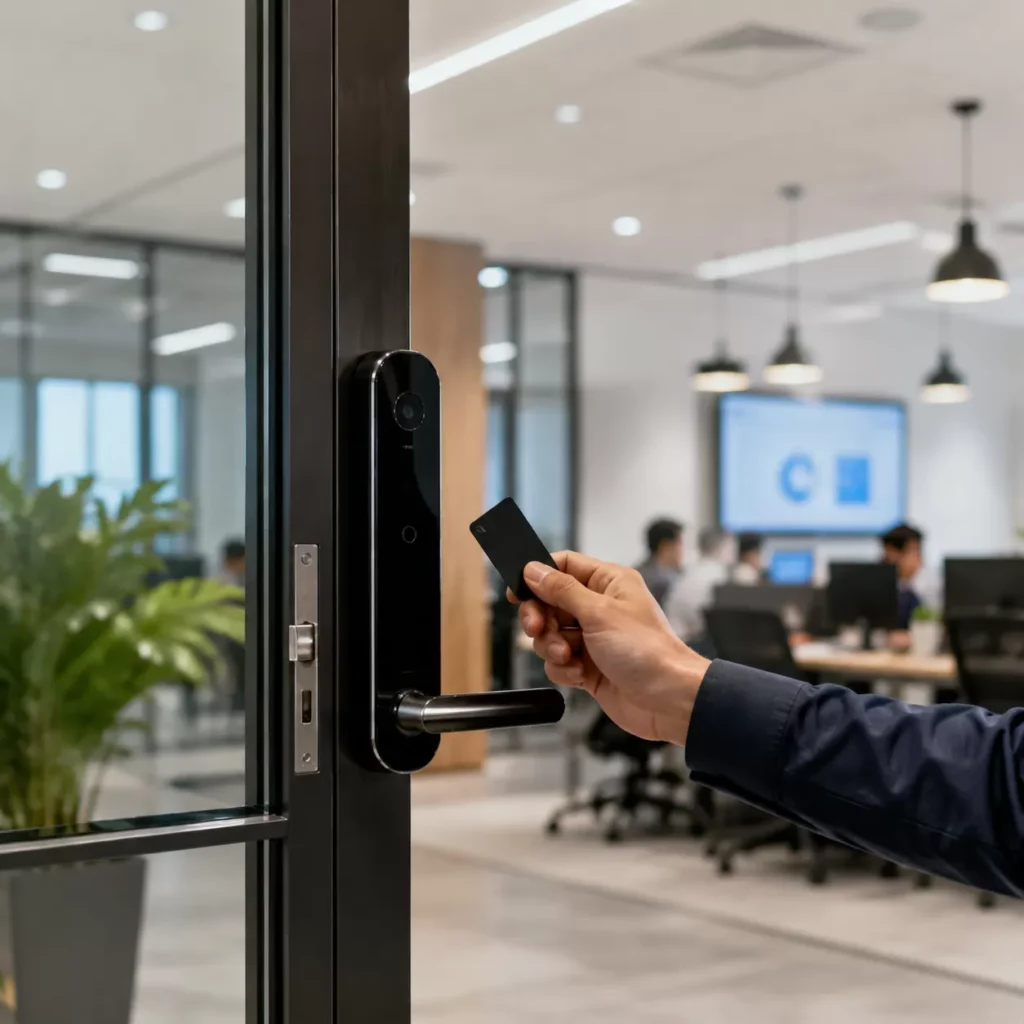
The Threat Landscape in Enterprise IoT Access Control
Facility managers and IT directors constantly face a shared anxiety: the realization that physical access points are often the weakest link in their broader cybersecurity architecture. As businesses transition toward connected commercial access control solutions, understanding the specific threats targeting enterprise IoT access control is critical for safeguarding both physical assets and digital networks.
Legacy Systems vs. Modern IoT Endpoints
The shift from traditional hardware to smart building security architecture exposes distinct vulnerabilities across different generations of technology:
- Legacy Access Systems: Rely heavily on outdated, unencrypted RFID credentials that are easily cloned. They lack real-time monitoring, making it impossible to instantly revoke compromised access.
- Modern IoT Endpoints: While offering superior tracking and remote management capabilities, these connected devices significantly expand the digital attack surface. A compromised smart lock can serve as a direct gateway into the corporate network if not properly secured.
Common IoT Attack Vectors
Securing enterprise facilities requires defending against a sophisticated array of physical and digital threats. Hackers frequently exploit the following vulnerabilities:
- Man-in-the-Middle (MitM) Attacks: Intercepting unencrypted communication between the smart lock and the central management server to steal credentials.
- Spoofing: Using falsified IP or MAC addresses to trick the network into authenticating an unauthorized device.
- Physical Tampering: Forcing the lock mechanism or accessing internal hardware components to bypass electronic controls.
- Network Infiltration: Exploiting outdated firmware on an access point to pivot laterally into internal business networks.
Why Consumer-Grade Locks Fail
Many organizations make the critical mistake of deploying off-the-shelf smart locks designed for residential use into complex commercial environments. Consumer-grade locks fail in enterprise settings for several reasons. They typically lack the processing power required for advanced cryptographic protocols, fail to provide comprehensive, tamper-proof audit logs, and do not support seamless enterprise physical security integration. For true commercial security, hardware must be engineered from the ground up to meet stringent global smart lock security standards for enterprise IoT.
Core Cryptographic Standards: The First Line of Defense
When protecting enterprise facilities, weak encryption simply isn\’t an option. Strong cryptography serves as the foundation of secure Global Smart Lock Security Standards for Enterprise IoT.
AES-256 Encryption Smart Locks
We rely on AES-256 encryption as the non-negotiable benchmark for securing data transmission and storage. This military-grade standard ensures that unauthorized parties cannot intercept, decode, or clone access credentials. For large-scale facility upgrades, implementing hardware with built-in AES-256 protection, such as sourcing a reliable smart door key lock wholesale, establishes a hardened cryptographic baseline across your entire building.
End-to-End Encryption (E2EE)
Protecting the physical endpoint is only half the battle. End-to-End Encryption (E2EE) safeguards the entire commercial access control ecosystem. From the moment a user presents a credential at the door to the central server verifying that identity, the data remains fully encrypted. This seamless encryption tunnel completely eliminates vulnerabilities during data transit across your network.
Secure Key Management and Dynamic Rotation
Static encryption keys create long-term security blind spots. Modern enterprise IoT access control requires robust key management paired with dynamic rotation protocols.
We implement key management strategies that include:
- Automated Key Rotation: Cryptographic keys are updated continuously without requiring manual administrative intervention.
- Isolated Secure Storage: Keys are stored within dedicated hardware security modules, isolating them from potential network breaches.
- Instant Revocation: In the event of a suspected threat, compromised keys are instantly invalidated to lock down the system immediately.
Evaluating Wireless Lock Communication Protocols
In enterprise IoT access control, the way devices communicate is just as critical as the physical hardware. Selecting the right wireless lock communication protocols determines the true resilience of your building management access systems. We prioritize protocols that offer both seamless integration and hardened security.
Zigbee Protocol Door Locks
Zigbee remains a foundational technology for enterprise facility management. Its localized mesh networking allows hundreds of access points to communicate efficiently without overloading the primary IT infrastructure.
- Symmetric Keys: Zigbee protocols utilize built-in symmetric key encryption, ensuring that data passed between the lock and the central hub remains protected from interception.
- Mesh Reliability: If one node drops offline, the signal reroutes automatically. This ensures your best commercial smart lock deployment stays responsive and secure at all times.
Matter Compatible Smart Locks
Matter compatibility is actively redefining smart building security architecture. It provides a universal standard that guarantees interoperability across different enterprise ecosystems while enforcing strict security benchmarks.
- Device Attestation Certificates (DAC): The Matter standard uses a blockchain-like cryptographic ledger. This ensures that only verified, legitimate devices are allowed to join the enterprise network.
- Zero Spoofing: By mandating these certificates, Matter compatible smart locks prevent rogue devices from infiltrating the system and compromising physical security.
Securing BLE and Wi-Fi Connections
Bluetooth Low Energy (BLE) and Wi-Fi deliver the high bandwidth required for instant mobile credentialing and real-time audit logs. However, these common protocols demand strict best practices to prevent unauthorized access.
- Network Segmentation: Wi-Fi enabled locks must operate on isolated, dedicated IoT networks rather than shared corporate servers.
- Payload Encryption: All BLE communications must utilize end-to-end encrypted payloads and randomized MAC addresses to prevent tracking and packet-sniffing attacks.
Global Regulatory and Industry Compliance Benchmarks
Meeting Global Smart Lock Security Standards for Enterprise IoT requires more than just basic encryption. We design our hardware and software to pass the strictest international compliance tests, ensuring your enterprise physical security integration is robust and legally sound across all global markets.
Essential IoT Cybersecurity and Privacy Standards
- ISO/IEC 27001 & 27040 (Data Security): These frameworks dictate rigorous data security and storage compliance in IoT. They ensure that all transmitted access data and network communications are systematically guarded against modern cyber threats.
- UL Solutions (UL 2900 & UL 1034): Comprehensive smart door lock compliance testing is non-negotiable. UL 2900 certifies software cybersecurity for network-connectable products to prevent hacking, while UL 1034 verifies physical burglary resistance against forced entry. Whether you are deploying high-security door access or an integrated smart locker solution, meeting these dual hardware and software benchmarks is critical for facility safety.
- GDPR & CCPA (Data Privacy): Navigating stringent data privacy laws is a major concern for global businesses. We structure our enterprise systems to compliantly manage access logs and secure biometric data storage, ensuring sensitive employee and visitor information is always handled transparently and securely.
Essential Security Features for Enterprise Deployments
When building a reliable smart building security architecture, hardware must actively defend your facility. As a leading electronic door lock factory, we engineer our commercial access control solutions to include non-negotiable security features right out of the box to meet rigorous global smart lock security standards for enterprise IoT.
Hardware-Level Multi-Factor Authentication (MFA)
Relying on a single keycard is no longer enough for enterprise physical security integration. True enterprise smart locks require Multi-Factor Authentication (MFA) directly at the device. This means combining secure PIN codes, encrypted mobile credentials, and advanced biometrics. For high-security zones, our AI face recognition locks in commercial real estate provide frictionless yet highly secure biometric access control encryption.
Over-The-Air (OTA) Firmware Updates
IoT network vulnerability mitigation requires constant vigilance. Hackers move fast, and your defenses must adapt instantly. Over-The-Air (OTA) firmware updates are critical for patching zero-day vulnerabilities. This ensures your commercial smart locks continuously maintain peak cybersecurity standards without requiring manual, lock-by-lock physical maintenance.
Tamper Alerts & Network Monitoring
Physical manipulation remains a primary attack vector. Enterprise smart locks must instantly detect forced entry attempts and broadcast tamper alerts across your building management access systems. Combined with real-time network health monitoring, security administrators instantly know if a lock goes offline, loses its Zigbee connection, or faces an active attack.
Enterprise Security Feature
| Security Feature | Enterprise Benefit | Defense Mechanism |
|---|---|---|
| Hardware MFA | Eliminates unauthorized entry via stolen credentials | Requires Biometrics + PIN + Mobile Credential |
| OTA Updates | Future-proofs IoT device cybersecurity standards | Automated remote software patching for zero-day threats |
| Tamper Alerts | Prevents forced entry and physical manipulation | Instant notifications to the central security dashboard |
| Health Monitoring | Ensures 100% uptime for physical security | Real-time tracking of battery life and network connectivity |
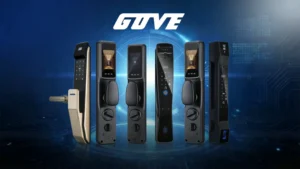
Engineering Security-First Smart Locks at Gove
As a dedicated B2B smart lock manufacturer, we build our hardware and software architectures around a single, uncompromising principle: enterprise physical security integration must be flawless. We do not just aim to meet Global Smart Lock Security Standards for Enterprise IoT; we actively engineer our commercial access control solutions to exceed them.
Our manufacturing and engineering processes focus on creating robust defenses from the circuit board to the cloud. We ensure our smart locks deliver reliable protection for complex building management access systems through the following core pillars:
- Seamless Cryptographic Integration: We embed AES-256 encryption directly into our enterprise product lines, ensuring that every data packet and access log remains entirely secure against interception.
- Advanced Connectivity: By natively integrating Zigbee protocols and full Matter compatibility, we guarantee that our locks communicate securely within any modern smart building security architecture.
- Relentless Penetration Testing: Before any product leaves our facility, it undergoes rigorous QA and stress testing. We simulate real-world cyberattacks and physical tampering to identify and mitigate IoT network vulnerabilities early in the manufacturing process.
When engineering solutions like the Gove A8016 Smart Door Lock, our team focuses on bridging the gap between heavy-duty physical security and advanced cybersecurity. By prioritizing commercial smart lock security at every stage of development, we deliver enterprise IoT access control systems that businesses can trust without hesitation.