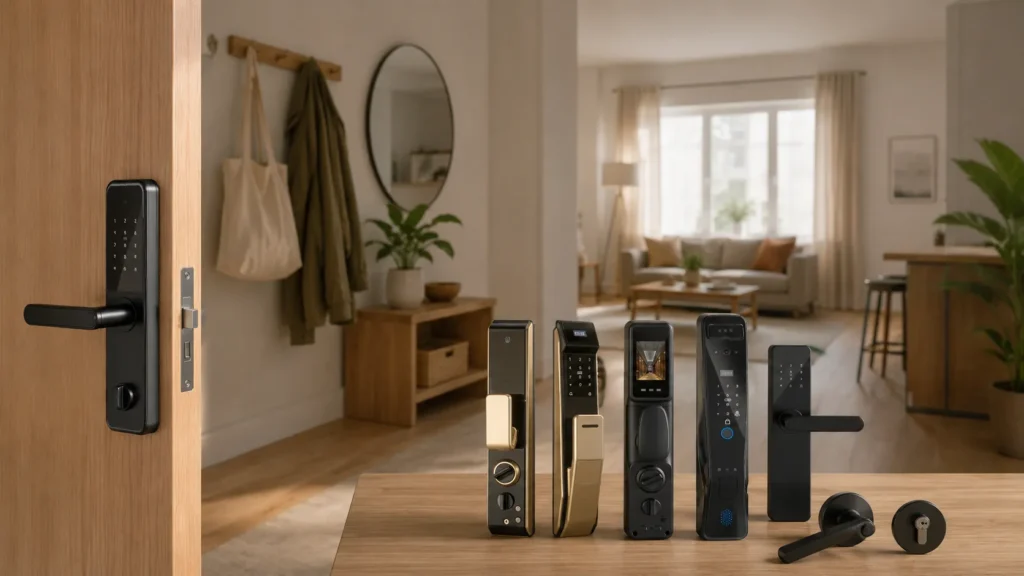
You’re standing at your apartment door, arms full of groceries, fumbling for keys in the dark. You’ve wanted a smart lock for months, but the fear of your landlord spotting a futuristic device on the door—and the anxiety of losing your security deposit—always held you back. Today’s renter-friendly smart locks change that: you can add keyless convenience without a single drill hole, and often without your landlord even noticing.
These aren’t the permanent deadbolts you see on homeowner doors. They’re retrofits and stealth designs built to keep the original key working and the hallway appearance untouched. Here’s how to pick the right one without risking your lease.
The Renter’s Golden Rule: Retrofit vs. Full Replacement
The single biggest decision for a renter boils down to this: choose a lock that only replaces the interior thumbturn, leaving the exterior keyhole intact. That’s the retrofit approach, and it’s the safest way to stay lease-compliant.
Retrofit smart locks mount directly over your existing deadbolt. You remove just the interior thumbturn, clamp the smart unit onto the inside plate, and you’re done. Your original key still works from the outside, which means the landlord can always enter in an emergency. When you move out, you simply unscrew the retrofit and screw the original thumbturn back on—no sign you were ever there.
A full replacement smart lock, on the other hand, swaps out the entire deadbolt assembly, including the exterior keyway. That means drilling, possibly a new hole in the door frame, and a completely different look on the outside. For most renters, this path invites unwanted questions and a potential deposit charge.
There’s also the “invisible” category, where the lock mechanism is hidden entirely inside the door and bolt. These are the ultimate stealth upgrade but require more careful installation inside the door core. They are still reversible, but you’ll need to be comfortable with a screwdriver and a little patience.
If you want zero landlord visibility and the simplest move-out restoration, stick with a retrofit that reuses your existing exterior key. For more on the various no-drill approaches, see our guide on no-drill smart locks and what separates a truly apartment-safe model from a homeowner’s gadget.
Top Renter-Friendly Smart Lock Categories for 2025
You’ll find dozens of models on the market, but for a rental, they all fall into three broad groups. Each trades off visibility, installation effort, and landlord acceptance in slightly different ways.
| Lock Type | Installation Difficulty | Landlord Approval Rating |
|---|---|---|
| Retrofit (Thumbturn adapter) | Low – no screws into the door face | Very High – exterior unchanged |
| Invisible (In-door insert) | Medium – internal bolt swap only | High – no visible hardware |
| Keypad-Replacement Deadbolt | High – full deadbolt swap, often needs drilling | Low – changes exterior appearance |
Actual installation effort and landlord tolerance can vary by building policy. Always confirm with your lease before purchasing.
Retrofit units like the popular apartment smart locks in Gove’s line clip on in minutes and work with most standard deadbolts. They tend to be slightly bulkier on the inside but terrifically simple. Invisible locks, meanwhile, keep the entire exterior and interior trim looking stock—an elegant choice if your building has strict hardware uniformity rules. A keypad-replacement model might tempt you with a sleek touchscreen, but because it visibly alters the outside, it’s rarely worth the deposit risk.
The 5-Minute Lease Audit: Is Your Lock Truly Renter-Friendly?
Before you click “buy,” run this quick checklist against any smart lock you’re considering. If it fails even one of these, you may be gambling with your security deposit.
- Does it require drilling new holes? The answer must be a hard no. Any lock that asks you to bore into the door or frame instantly breaks the “no permanent modification” rule most leases enforce.
- Can you keep the original exterior keyway? A truly renter-friendly lock lets your landlord’s key work exactly as before. If the lock replaces the exterior cylinder, you’ve crossed into modification territory.
- Is the installation 100% reversible in under 10 minutes? Test yourself: can you restore the original thumbturn with only a screwdriver, and would a maintenance person spot the difference? If not, reconsider.
- Does it come with a standard key backup for emergencies? Some retrofits rely only on the app or keypad. If the battery dies and there’s no physical key slot outside, you’re locked out. A thumbturn adapter that retains the original key is ideal.
- Will it void your renter’s insurance? This isn’t about the lock itself but about the lease: some policies only cover damage to original fixtures. If a moisture sensor leak or a battery fire is even remotely possible inside the lock, check your coverage. Most batteries are safe, but it’s worth a quick call.
You may also want to review our no-drill installation tips to see how the process works on common apartment doors, so you’ll know exactly what to expect before the package arrives.
Key Features Every Apartment Dweller Needs
Now that you know the installation must be reversible, let’s talk about the daily-use features that matter most in a rental setting. These aren’t just nice-to-haves; they’re what prevent that pit-in-your-stomach feeling when you’re three blocks away wondering if you locked the door.
- Auto-Lock. For hallway-facing doors, this is borderline essential. Set the lock to automatically re-engage after 30 seconds or a minute. That way, even if you dash out without a second thought, the door secures itself. Look for models where you can adjust or disable the timer—some apartments need longer pauses for moving furniture or groceries.
- Guest Access. Between dog walkers, cleaners, and visiting friends, you’ll want to grant temporary codes without handing out a physical key that can be copied. Most retrofits let you create time-bound PINs or send virtual keys via an app. When the code expires, it’s gone. This is a huge plus for keyless entry for apartments because you never have to worry about who still has a key.
- Connectivity. This is where many renters get confused. A Bluetooth-only lock pairs directly with your phone when you’re within range—great for battery life, but no remote control. A Wi-Fi-enabled lock or one with a plug-in bridge lets you lock remotely and receive alerts anywhere. If your apartment entry is down a long hall, Bluetooth range might not reach, so a bridge becomes important. For most renters, a model that works locally via Bluetooth but can be upgraded to remote access with a small plug-in bridge offers the best flexibility.
- Battery Life & Alerts. Since you can’t hardwire a lock in a rental, everything runs on batteries. Look for units that promise at least six months of life under normal use, and that will push a low-battery alert to your phone well before the lock dies. Some models also have an exterior emergency jump-start contact point—you press a 9V battery against two tiny posts to power up and unlock, a literal lifesaver if you’re not carrying a key.
Stealth vs. Visible: Which Style Fits Your Building?
Apartment living often comes with unwritten social rules about what your door should look like. Some buildings feel modern and relaxed; others have long-time residents and landlords who watch the hallway like a hawk. The visual style of your smart lock can either blend in or draw attention.
An invisible smart lock is the ultimate stealth option. From the outside, nothing changes. The lock mechanism sits entirely inside the door, and you unlock via your phone or a discreet key fob. Even maintenance staff won’t notice anything different unless you tell them. This works beautifully in buildings with strict “uniform hardware” clauses in the lease. The trade-off: invisible locks often require a more involved internal installation, and you rely heavily on your phone or a little remote.
Visible keypad locks offer clear benefits for guests and family members who don’t want to download an app. A number pad on the outside is intuitive and quick. But it also announces that a renter “upgraded” the lock. If your landlord is known for periodic inspections or if your building forbids alterations to the door’s appearance, a visible keypad could trigger a tense conversation. If you do prefer a keypad, look for a slim, low-profile model that mounts over the existing deadbolt but doesn’t require changing the exterior housing. That keeps the original key slot exposed and still looks mostly standard to a casual glance.
When weighing stealth against convenience, ask yourself: does my landlord ever enter for maintenance without me present? If yes, a completely invisible lock might cause an awkward lockout for them, because they’d have no idea how to get in. A visible but non-destructive retrofit with a key slot is often the best compromise for landlord-renter harmony.
Installation Tips to Protect Your Security Deposit
Even the most reversible no-drill installation can lead to trouble if you rush through it. Here’s how to keep the door damage-free and the deposit fully intact.
- Save the original hardware immediately. As soon as you remove the interior thumbturn, place every screw, washer, and the thumbturn itself into a labeled zip-lock bag. Tape that bag to the inside of your hallway closet door or keep it in your lease folder. When move-out day comes, you won’t be scrambling to find a tiny brass screw.
- Take “Before” photos. Snap clear pictures of the inside escutcheon plate, the door edge, and the strike plate before you start. If any mark was already there—a scratch, a ding—document it. Should a dispute arise, those photos are your proof that you didn’t cause new damage.
- Use painters tape. Before clamping the retrofit unit over the door, place a strip of blue painters tape on the door surface where the metal plate will rest. This prevents micro-scratches from the metal bracket. The tape stays hidden under the lock and peels off cleanly later.
- The “Move-Out” test. Right after installing, run a mental drill: how quickly can you reverse this? If it takes more than 15 minutes, practice once. The goal is a restoration so seamless that even a skeptical landlord can’t tell you ever touched it.
Too many renters lose deposits over mismatched screw holes that could have been avoided with a few extra minutes of care. If your deadbolt is slightly stiff, try dry lubricant (not oil) on the bolt before mounting the smart unit; it prevents the motor from straining. Check our smart deadbolt for renters resource if your existing bolt needs a quick refresh.
Find the Perfect Fit for Your Front Door
Choosing a smart lock as a renter comes down to matching your specific door and building vibe to the right category. If you want the easiest possible setup and peace of mind that no one will notice, a retrofit smart lock that mounts in minutes is your winner. If you’re in a design-conscious building where even the interior should stay pristine, an invisible in-door model offers a nearly magical upgrade.
We offer a collection of renter-friendly smart locks designed to keep your deposit safe and your hallway looking the same as everyone else’s. Many of our models also integrate with smart home systems like HomeKit compatible smart lock platforms, so you can build a connected apartment without drilling a single hole. Ready to see which model fits your door? Browse our selection below.
Frequently Asked Questions
Can my landlord still use their original key?
Yes, if you use a retrofit lock that only replaces the interior thumbturn. The original exterior keyway and cylinder stay in place, so your landlord’s key works exactly as before.
Do I need to ask permission before installing a smart lock?
Legally, it depends on your lease. In most standard rental agreements, a non-permanent interior modification that doesn’t alter the exterior appearance or damage the door doesn’t require permission. Still, a brief, friendly heads-up often goes a long way—many landlords appreciate the added security and the fact that you’re not handing out physical keys.
What happens if the smart lock battery dies while I’m out?
This is why retaining the physical key backup is so important. Most renter-friendly retrofits let you use the original key to unlock the door mechanically, even if the smart unit is completely dead. Some models also have external battery jump-start contacts, where you can press a 9V battery against two pins to power the lock temporarily. Always carry a key or know where a spare is hidden.
Are there smart locks that work with “mortise” style locks found in older apartments?
Mortise locks present a compatibility challenge because they use a different internal mechanism than standard deadbolts. A few manufacturers offer specialized adapters or slim retrofit units that fit into the thumbturn slot of a mortise lock, but options are limited. Before buying, take a photo of your lock and compare it with the compatibility checker on the product page. If you’re unsure, reach out to our support team—we can help you identify whether a retrofit will work or if you’d need a more complex adapter.