The decision between wired vs wireless access control starts with your building, not the hardware catalog. Before comparing reader specs or battery life, verify three facility realities that usually overrule everything else.
- Are you in a leased space, a historic structure, or a building you own outright?
- Do the security doors that matter most sit on the perimeter, or are they deep inside the floor plate?
- Can your facility tolerate a week of wall and ceiling disruption, or does every installation hour count against operating revenue?
Architectural Differences at the Door
The core difference isn’t how a credential is read – it’s how power and data reach the door. Wired wireless access control locks are often misunderstood at the infrastructure level, and that mistake leads to expensive change orders later.
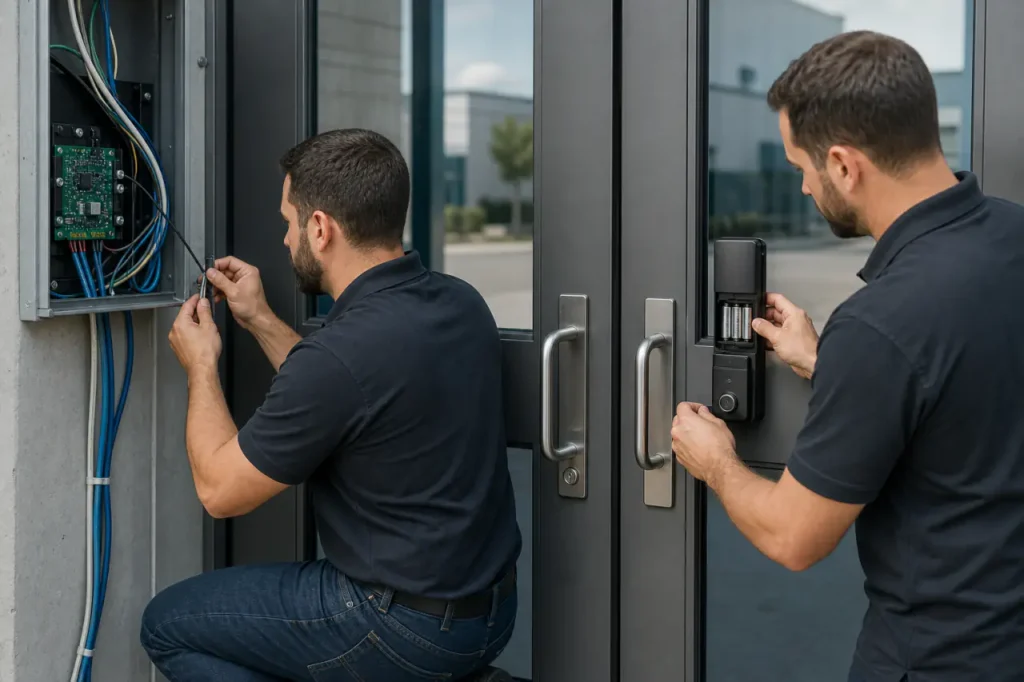
Wired access control depends on physical cabling. A dedicated low-voltage cable – typically Cat5e, Cat6, or a composite security cable – runs from a central controller or PoE switch to each door reader and lock. That cable delivers constant power plus an always-on data channel.
The lock mechanism (often an electric strike or magnetic lock) is energized directly from the building’s power infrastructure, with no battery to replace at the door.
Wireless access control removes the door-level cable. A battery-powered lockset or wall-mounted reader communicates over Wi-Fi, Bluetooth, or a proprietary 900 MHz / 2.4 GHz protocol to a nearby access point or gateway.
The gateway bridges back to the network – sometimes over Ethernet, sometimes wirelessly.
Power comes from on-board batteries, not a central feed. The reader’s data link is wireless, and its lock actuator runs off those same batteries.
This architectural split changes every downstream decision: installation disruption, total cost of ownership, security resilience, and what happens when the building loses power.
Core Comparison: Security, Installation, and Maintenance
Wired systems demand high upfront capital. Wireless systems shift cost toward ongoing operational maintenance. The choice isn’t cheap vs. expensive – it’s capital budget vs. facility staffing load.
| مقياس | Wired Access Control | التحكم في الوصول اللاسلكي |
|---|---|---|
| التكلفة المسبقة | مرتفع – سحب الكابلات، حفر الأبواب، عمل الكهربائي، وغالبًا لوحة تحكم وصول مخصصة | معتدل – تكلفة معدات القفل، بالإضافة إلى البوابة(البوابات)؛ بدون كابل باب |
| اضطراب التثبيت | ملحوظ – فتح الجدران، الأسقف، وإطارات الأبواب؛ قد يتطلب عمل بعد ساعات العمل في أماكن مشغولة | ضئيل – استبدال أقفال السطح بمعدات موجودة؛ بضع ساعات لكل باب |
| مصدر الطاقة | مركزي – يتم تشغيله من التيار الرئيسي للمبنى، عادة مع احتياطي UPS/مولد كهربائي | لامركزي – بطاريات ليثيوم أو قلوية عند كل باب؛ قد تكون البوابة PoE |
| استقرار البيانات | مرتفع جدًا – مسار نحاسي مخصص، بدون تداخل؛ اتصال دائم بالمتحكم | يعتمد على بيئة التردد اللاسلكي؛ عرضة لنقاط الموت، الازدحام، والتشويش |
| عبء الصيانة | منخفض – بمجرد التشغيل، الاتصالات المادية نادرًا ما تفشل؛ عمر الخدمة يعتمد على عمر الأجهزة | مرتفع – استبدال البطاريات المجدول عبر جميع الأبواب؛ مسوحات الإشارة؛ تحديث البرامج الثابتة وتصحيح الأمان |
الفجوة الأولية واضحة وسهلة الرؤية. الطلب على القوى العاملة على المدى الطويل هو ما يفاجئ مديري المنشآت.
نشر نظام لاسلكي لـ 40 بابًا قد يتطلب 80-160 استبدال بطارية سنويًا، كل منها يتطلب زيارة فني وربما سلم. قارن ذلك بنظام سلكي حيث الصيانة الروتينية الوحيدة على مستوى الباب قد تكون تعديل محاذاة القفل كل بضع سنوات.
اضطراب التثبيت والتكاليف الأولية
إذا كان المبنى جديدًا مع أسقف مفتوحة، فإن تشغيل أنظمة التحكم في الوصول باستخدام PoE هو جزء بسيط من ألم التحديث. ينخفض تكلفة الكابل لكل باب بشكل كبير عندما لا تكون الجدران الجافة مثبتة بعد.
في تحديث مكتب مشغول، يمكن أن يتضاعف سحب الكابل نفسه ثلاث مرات في العمل. الزيادة في التكلفة تأتي من:
- تصليح الجدران الجافة وإعادة الطلاء حول كل اختراق
- جدولة بعد ساعات العمل لتجنب تعطيل الأعمال
- توجيه الكابل حول الأثاث وأنظمة الحواجز الموجودة
تجنب الأقفال اللاسلكية ذلك تمامًا. يستبدل المثبت جسم القفل الأسطواني أو قفل المورتيس بنسخة إلكترونية تعمل بالبطارية. جهاز البوابة، غالبًا ما يكون مركبًا في السقف ويعمل بواسطة PoE، يغطي 8-16 بابًا. الباب نفسه لا يرى أي كابل جديد.
بالنسبة لجدول المشروع، فإن ذلك يختصر أسابيع من البناء إلى بضعة أيام من استبدال الأجهزة.
الاعتمادية والتكلفة الإجمالية للملكية (TCO)
تقسم الاعتمادية إلى مجالين: موثوقية الإشارة وموثوقية الطاقة. تتجاهل الأنظمة السلكية ظروف التردد اللاسلكي تمامًا. الباب الذي يقع على بعد خمسة طوابق تحت مستوى الأرض في درج خرساني يتصرف تمامًا مثل قارئ اللوبي.
تتطلب الأنظمة اللاسلكية دراسات ميدانية دقيقة. يمكن أن تظهر مناطق ميتة مستمرة في غرف آلات المصاعد، والسلالم المقاومة للحريق، والمناطق ذات الإطارات المعدنية الكثيفة. يجب أن يتحقق مسح الموقع اللاسلكي من:
- قوة الإشارة في كل موقع باب، وليس فقط في الممر
- التداخل من بنية الواي فاي 2.4 جيجاهرتز الموجودة
- اختراق التردد اللاسلكي عبر أبواب الحريق والنوى الخرسانية
- وضع البوابة الذي يتجنب الزوايا المظللة بالمعدن
موثوقية الطاقة هي المتغير الأكبر في TCO. قفل سلكي، مدعوم بواسطة UPS، يظل فعالًا خلال ساعات انقطاع التيار الكهربائي.
سلوك القفل اللاسلكي عند انخفاض البطارية يعتمد على تكوينه الآمن، لكن السيناريو الشائع هو تدهور الأداء أو خطر القفل إذا تأخرت جداول الاستبدال.
الـ TCO الحقيقي للأنظمة اللاسلكية يشمل ليس فقط البطاريات، بل نظام إدارة العمالة لتتبع دورات الاستبدال عبر الأسطول. العناصر الرئيسية لـ TCO لنشر لاسلكي عادةً تشمل:
- تكلفة البطارية لكل باب سنويًا (يعتمد بشكل كبير على حركة المرور)
- ساعات الفني المجدولة لاستبدال البطاريات بكميات كبيرة
- البرمجيات أو جداول البيانات لتتبع دورات الاستبدال
- مكالمات خدمة الطوارئ للأبواب التي توقفت عن العمل بسبب نفاد البطاريات
Security Profiles: Tampering, Fail-Safes, and Signal Integrity
Wired configurations generally offer higher physical security and resilience against signal interference. For perimeter doors facing the street, server room entries, and emergency egress corridors, that matters a great deal.
Three threat vectors separate the two architectures:
- Physical tampering. A wired reader on a metal backplate with a weatherproof seal presents a hardened target. Wireless locksets, especially those with exposed battery compartments, are more accessible to a motivated attacker with a pry tool. The lock’s motor and gear train sit behind the same housing the battery slides into – a physical attack point that doesn’t exist on a wired electric strike buried in the door frame.
- RF interference and jamming. Wireless access control operates on shared spectrum. A portable jammer, a faulty microwave oven in the breakroom, or a dense Wi-Fi deployment can degrade or deny the link between the lock and its gateway. Wired systems have no over-the-air attack surface at the door – the data path is copper, not radio. For facilities subject to a physical security audit, this is often the deciding factor.
- Fail-safe door locks at wired doors can be powered from a centralized fire alarm interface, guaranteeing unlock on alarm regardless of local condition. A battery-powered fail-safe door lock must be carefully designed to fail open when voltage drops to a threshold, and that behavior must be tested under load. In a fire event, a lock that doesn’t reliably release because its battery is at 12% is a liability.
Encryption standards on modern wireless locks have closed the eavesdropping gap considerably. AES-128 or higher, combined with mutual authentication between lock and gateway, makes interception technically difficult. But signal integrity isn’t just about encryption – it’s about availability.
A lock that can’t hear the command because of interference is a security gap even if the data is perfectly encrypted.
Application Suitability: Choosing the Right Configuration
Your building’s architecture, lease status, and security tier should dictate your choice of hardware. The most expensive mistake is applying the same standard to every door without asking what each door protects.
Before you select a system for any door, verify these facility conditions:
- Is the building owner-occupied, leased, or historically listed?
- Which doors face the exterior perimeter or protect critical assets?
- cURL Too many subrequests by single Worker invocation. To configure this limit, refer to https://developers.cloudflare.com/workers/wrangler/configuration/#limits
- cURL Too many subrequests by single Worker invocation. To configure this limit, refer to https://developers.cloudflare.com/workers/wrangler/configuration/#limits
| cURL Too many subrequests by single Worker invocation. To configure this limit, refer to https://developers.cloudflare.com/workers/wrangler/configuration/#limits | نظام موصى به | السبب الرئيسي |
|---|---|---|
| إنشاء جديد، مبنى مملوك | سلكي (PoE) | أقل تكلفة تركيب كابلات إضافية أثناء البناء؛ أقصى استقرار للأبواب المحيطة والأبواب ذات الأمان العالي |
| مبنى تاريخي أو موقع معلم | لاسلكي | يتجنب الحفر في الحجر، والإطارات المزخرفة، والنسيج المدرج؛ ي preserves تركيبها سلامة العمارة للمبنى |
| مساحة مكتب مؤجرة (مدة 3-7 سنوات) | لاسلكي | يتجنب التعديلات الهيكلية التي تتطلب موافقة المالك وإزالتها عند نهاية العقد؛ تكاليف رأس مال منخفضة، أجهزة محمولة |
| البنية التحتية الحيوية / مركز البيانات | سلكي، مع اختيار لاسلكي داخلي | أبواب المحيط وغرفة الخادم تتطلب طاقة مستمرة وخلو من مخاطر التردد اللاسلكي؛ أبواب الإدارة الداخلية يمكن أن تكون لاسلكية لمرونة أكبر |
| أبواب داخلية ذات دوران عالي (مثل مساحات العمل المشتركة، المساحات المرنة) | لاسلكي | إعادة تكوين سريعة بدون إعادة تركيب الكابلات؛ تغييرات الاعتمادات تتم عبر البرمجيات؛ يدعم تغييرات تخطيط المكتب المتكررة |
بالنسبة للمباني التاريخية، اللاسلكي ليس أسهل فحسب – بل غالبًا هو الخيار الوحيد الذي يرضي السلطة المعنية بالتراث المحلي. بالنسبة للمساحات المؤجرة، يمكن أن يتوقف مشروع تركيب الكابلات بسبب موافقة المالك على الاختراقات؛ اللاسلكي يزيل ذلك الاعتماد.
لكن إذا كنت تملك المبنى والجدران لم تُختم بعد، فإن تخطي الكابل يضحي بالأمان على المدى الطويل. قد يبدو التوفير على المدى القصير أقل جاذبية بعد خمس سنوات.
النهج الهجين: أفضل ما في العالمين
تستخدم معظم المرافق الكبيرة بنية هجينة لتحقيق توازن بين القوة والمتانة perimeter door security with budget efficiency.
The rule is simple: hardwire any door that faces the outside, protects high-value assets, or serves as a critical egress point, and use wireless for everything inside that doesn’t meet those criteria.
A typical hybrid layout divides doors into two tiers:
- Wired for: exterior doors, loading dock roll-ups, IT/server rooms, cash-handling spaces, and critical egress corridors.
- Wireless for: interior offices, meeting rooms, break areas, coworking zones, and amenity spaces.
Those wired doors get constant power, central fire alarm integration, and immune-to-jamming data paths. Wireless interior doors receive over-the-air credential updates and scheduling, with no new cabling.
A single التحكم في الوصول السحابي platform manages both device types under one interface, so the security team sees a unified event log from a single pane of glass.
This scalable access control model also lets you phase the deployment. An organization might start with wireless interior locks for hot-desking access, then add wired perimeter doors later when renovation budget is approved.
The head-end software must support a mixed fleet without requiring multiple databases or operator consoles.
Request a Custom Facility Access Audit
The right access control architecture depends entirely on your building’s footprint, daily traffic patterns, and security compliance needs.
A spec sheet comparison gets you started, but a site walk that maps cable paths, measures RF interference, and identifies fire alarm integration points produces an accurate hardware plan and a realistic total cost of ownership forecast.
We work with commercial integrators and facility directors to assess door-by-door requirements and recommend hardware configurations that balance security, installation reality, and long-term maintenance cost.
إذا كنت تقارن أنظمة التحكم في الوصول المتكاملة لمشروع جديد أو تحديث، يمكن لفريق الهندسة لدينا مساعدتك في مراجعة جدول الأبواب، وتحديد الأماكن التي يكون فيها السلك منطقيًا، وأين تكون الأقفال اللاسلكية بدون بطارية أو الأقفال اللاسلكية الموفرة للطاقة يمكن أن تقلل من الانقطاع دون تقليل الأمان.
تواصل معنا لمناقشة تدقيق وصول مخصص للمرافق وخطة الأجهزة.