Investing in a commercial access system is one of the most important decisions you will make for your building security, operating procedures, and expense budget. Unfortunately, between maglocks, electric strikes and tangling with stringent ADA compliance to fire-rated specifications, it’s a whole lot of information to process.
For years, I helped businesses with physical security audits and infrastructure upgrades. In this guide, we are going beyond the sales pitches and straight to the point. Provided an in-depth guide on how to assess lock grades, evaluate hardware against your unique traffic patterns, and opt for a scalable system that secures your assets without interrupting productivity.
Let’s dive right in.
Understanding Commercial Access Control Locks
What is Commercial Door Locks?
Commercial door lock is a type of security swerve which is designed to protect assets, personnel, and business endeavor in an extensive manner. These systems are designed to withstand the wear and tear of constant use at high volumes, without sacrificing its structural integrity unlike tested locking hardware. Being one of the dependable lock manufacturers and suppliers, we formulate these solutions as per some stringent regulatory standards regarding compliance to fire safety, life safety and building code. Commercial locks need to work with a system and modern ones have moved on from physical mechanics, having electronic advantages like digital access control instead of traditional keys.
Commercial vs. Residential Door Locks
The main differences between commercial and residential locks come down to durability, security ratings, and intended use.
- Durability & Grade: Commercial access control locks are usually tested for ANSI/BHMA Grade 1, capable of lasting over 1 million cycles. There are 3 grades (1 in the most strict category) and residential locks typically meet Grade 2 or Grade 3, which is for much less use.
- Material Strength: Commercial locksets are designed and constructed from heavy-gauge steel, solid brass, and proprietary internal components that resist forces of entry, tampering or severe environmental conditions.
- Key Management: Residential locks only usually utilize a basic key or pin code system. While commercial systems may manage hundreds of daily users depending on their key control, master keying infrastructure or keyless electronic management.
| Feature | Commercial Locks | Residential Locks |
|---|---|---|
| ANSI/BHMA Grade | Grade 1 (Highest Security) | Grade 2 or Grade 3 |
| Cycle Life Expectancy | 500,000+ cycles | 100,000 to 400,000 cycles |
| Primary Material | Heavy-duty steel / Solid brass / Formed steel | Die-cast zinc |
| Traffic Suitability | High to extreme volume | Low to medium volume |
What separates an access control system from a smart lock?
Both types of locks do away with traditional keys; but they cater to vastly different architectural scales, where networked smart locks can be thought of as a parallel to enterprise access control systems.
- Office Smart Lock Systems: Local, standalone devices are typically controlled with a mobile app or PIN code. These are great for small business or single use office door to operate but are individually controlled making large scale management unwieldy.
- Commercial Access Control System: These are the totally integrated summit of the framework system. They link numerous possible points of entry to a single management server. The approach enables security admins to change permissions in real time, monitor audit trails instantaneously along with integrating locking hardware and building management systems (BMS), CCTV and fire alarm systems.
Investing in scalable access control systems secures long-term enterprise operations, flexible management, and overall oversight for global businesses running critical infrastructure.
Main Features of Commercial Electronic Lock Systems
In order to have a fortress gate, you need a mechanism that synchronises each component. As a top lock manufacturer and supplier, we create these systems to make your B2B procurements for access control systems as smooth and high-performing as possible. A strong commercial architecture is created with the help of three operational building blocks.
Access Control Readers and Credentials
The reader is the front end of your security system. It checks and validates data, allowing or denying access. Keys to unlock doors are replaced with users presenting credentials.
- Keycards and Fobs: firm non-facile e facile da provvedere per i dipendenti
- Biometrics: Use an authenticating trait such as fingerprints or face for high-security areas.
- Mobile Access — Digital keys on smartphones with Bluetooth or NFC.
Electronic Locking Hardware
This is the actual physical mechanism that keeps the door closed. When a credential is approved by the reader, it tells the electronic locking hardware to lock or unlock.
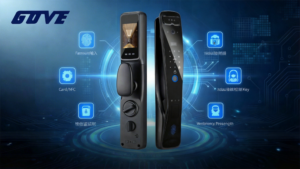
Based on your facility, such hardware might include high duty electric strikes or magnetic locks. If your business seeks a neat complete solution that reduces messy cabling, integrated choices like an office smart lock system bundle the reader and locking mechanics inside the door handle for unchallenging installation.
Power Supplies and Control Panels
The control panel is like the brain of the whole process. It receives the data from the readers, checks it against permissions and activates the hardware!
- Specialized Power Supplies: Provide continuous and stable voltage to all commercial access control locks.
- Backup batteries: Make sure your doors continue to work and stay secure if a power outage occurs.
- Networked Smart Locks Hubs: One can link or connect the smart locks placed on their family doors to a central or similar management software, enabling its owner to track them in real time.
Different Types of Commercial Door Locks
When deploying commercial access control locks, the most important step is choosing the right hardware. Not all doors can or should use the same types of locking mechanisms to find a proper compromise between security, life safety policies and everyday convenience.
Mechanical and Keyed Locks
Although electronic systems are the norm nowadays for enterprises, traditional mechanical locks continue to provide a necessary backup or basic security measure on low-traffic inside doors.
- Mortise Lock: A heavy-duty lock built directly into the door pocket. These are more strong and durable for a high-traffic commercial space.
- Cylindrical Locks: shallower, which makes them easier to install, and they’re definitely the jig-them apartment locks you see on eve more slip-in clip style 4-5 doorways?
Electronic and Keyless Entry Locks
Instead of physical keys, electronic and keyless entry locks rely on digital credentials. We are a lock manufacturer and supplier that designs these systems to increase efficiency in B2B access control procurement, while also eliminating the ongoing costs of rekeying.
- Keypad Locks: Users must input a PIN code to unlock. Good for utility closets or staff break rooms
- Smart Card & RFID Locks: An employee taps a key fob or proximity card.
- Mobile Access Locks: Users open the door over Bluetooth or NFC, using their mobile phones as a key.The modern office key and smart lock system.
Magnetic Locks (Maglocks)
Magnetic locks hold a door closed by means of an electromagnetic constant current. Under power, the plate is forced to the magnet with extreme force, usually rated between 600 and 1,200# of holding power.
- Best Used For: Glass storefront doors, emergency exit door as well as high-security perimeters.
- Fail-Safe Nature: An enforced lock can only be opened with a swipe of access throughout the lock. The lock releases automatically if the power is cut off or a fire alarm goes off to ensure safe exit.
- Compliance: Because they obstruct one or more door frames when powered, local building codes require that they be integrated with motion sensors and emergency push-to-exit buttons to maintain stringent safety requirements.
Electric Strike Locks
Instead of a fixed strike plate secured to the door frame, an electric strike lock provides a ramp driven by either a motor or solenoid.
- How they work: The lock is held in the door frame until an authorized credential tells the strike to pivot, allowing the user to push or pull on the door without needing to turn the physical handle.
- Function: Electric locks such as electric strikes are most commonly fail-secure, unlike maglocks. The door can be locked from the outside to prevent people coming in, and if the power goes down, then it stays that way; but from inside you can still turn it mechanically without electricity and just open your stuff freely.
- Versatile: They are compatible with existing mechanical locksets, ideal for main office entrances, buzzer systems or intercom-controlled doors. To learn more about hardware integration and compliance, read our industry guide.
Another important place to look for commercial lock information is the ANSI/BHMA 156 classification system.
ANSI/BHMA Grades: durability & security benchmarks
With sourcing commercial access control locks, there is no room for guesswork. The Builders Hardware Manufacturers Association (BHMA) and ANSI created tough testing standards to classify the durability and security of locks. Being one of the top lock manufacturers, we reiterate on selecting the grade that suits your facility day-to-day punishment.
Grade 1: Maximum Security and Heavy Traffic
Grade 1 locks offer the most secure and durable option available. These high-force locks are designed to be physically heavy-duty and tolerant of not failing after countless million times worn.
- Cycle Life: 1,000,000 cycles of open-and-close.
- Ideal: Any main building entrance, including schools, hospitals and high-foot traffic retail storefronts.
- Security Level: Most resistant to forced entries and physical attacks.
Grade 2: Intermediate Security and Medium Traffic
Grade 2 locks provide a moderate level of, and efficient lock offering in high traffic areas (Places which does not required heavy traffic continuously).
- Cycle Life: Rated for 400,000 cycles.
- Ideal For: Interior office’s doors, it’s storage rooms, and side entrances.
- Security Level: Solid Everyday Protection for Regular Commercial Applications
Grade 3: Low Traffic and Standard Security
Basic structures are only allowed a minimum of grade 3 locks. This is fine for domestic purposes but they tend not to be able to stand up to the rigorous demands of a commercial setting.
- Cycle Life: 200,000 cycles tested.
- Ideal For: Break rooms, supply closets, or any low-security interior location.
- Security Type: Basic security; very prone to wear and physical tampering.
| Feature | Grade 1 (Max) | Grade 2 (Intermediate) | Grade 3 (Standard) |
|---|---|---|---|
| Tested Cycles | 1,000,000+ | 400,000 | 200,000 |
| Traffic Level | High / Continuous | Medium / Intermittent | Low / Light |
| Primary Use | Main Perimeters & Public Hubs | Interior Offices & Suites | Closets & Low-Risk Rooms |
Important Lock Functions and Regulations
Evaluating a commercial access control lock involves understanding the various options for mechanical function and compliance as well as the necessary electronic software elements. As a reputable electronic door lock factory, we develop our hardware to meet stringent safety and operational requirements.
Storeroom and Classroom Functions
How commercial locks work — Pivots or How traffic passes through an opening Choosing one function inherently jeopardizes everyday convenience and safety of the building.
- Store Room: The outside lever is always locked. You can get in using a legitimate credential (or mechanical key override), whereas the inside lever is free egress at any time. This is the go-to pick for secured perimeter doors and IT closets.
- CPC Classroom Function: Outside lever may be locked or unlocked via key, or an access control command. In the unlocked state it is simply a latch, allowing two-way traffic without restrictions.
Fire-Rated Assembly Requirements
Once closed, any hardware affixed to fire doors must maintain the fire barrier to ensure lives are saved in a critical situation.
| Specification | Feature / Specification | Impact on Lock Selection |
|---|---|---|
| Fail-Secure Mode | Door remains locked from the outside in case of power failure. | Standard for fire resistant doors preventing the spreading of flame and securing. |
| Fail-Safe Mode | Door opened by itself (when power was lost). | Limited to particular life-safety exit doors and must be well-coordinated with fire codes in effect locally. |
| Fire rating | Hardware must have a UL 10C or equivalent fire rating. | The electronic lock must be rated for use with 20-minute, 1-hour, or 3-hour fire doors. |
ADA Compliance and Accessibility
Commercial building hardware must be accessible to persons with disabilities as required by the Americans with Disabilities Act.
- Lever Handles: Knob designs are not allowed on commercial doors. When changing the locks, lever handles should be installed as all operated without tight grasping or pinching and twisting of the wrist.
- Force to Activate: Maximum 5 pounds. The force required to activate the mechanism should be less than 5 pounds in order to unlock the door.
- Install Height: Must be between 34 in. and 48 in. above the finished floor for actuators, readers, and physical levers.
Selecting Commercial Access Control Locks
When selecting the appropriate commercial access control locks, you must weigh security against day-to-day foot traffic and lifetime costs. Being a trusted lock manufacturer and supplier, we suggest assessing your facility’s unique requirements before finalizing a B2B access control procurement.
Evaluate Traffic and Threat levels
For example, a main entrance receiving high traffic requires heavier duty hardware than a low-use supply closet.
- High Traffic/High Security: Entrance doors, server rooms and primary lobbies. Such places need robust, hardwired systems that can endure heavy use with little to no failure.
- Moderate to Low Exposures: Internal offices, conference rooms, and storage areas. This is where standalone or wireless commercial door smart locks come in.
Establish User Role and Credentials
So think about how your team and visitors will be opening those doors. The correct credential protects against attackers but bestows utility upon genuine end users.
| Authentication Type | Best Use | Primary Benefit |
|---|---|---|
| Key Cards / Fobs | Large, full-time workforce | Low-cost replacement |
| Mobile Apps | Modern offices and remote workers | No physical cards required |
| PIN Codes | Shared spaces, temporary users | Issuable and not static |
| Biometrics | High-security areas | Non-standardizable |
Assess Integration and Scalability with Current Systems
Do not purchase proprietary hardware that locks you in with a single vendor. Choose networked smart locks without that are built on open platforms and takes part well in your current security system.
- System integration: The locks must connect directly with your current CCTV cameras, alarm systems and fire safety panels.
- Ability to scale up: Look for systems that add additional doors or multi-site locations in the same management software as you expand your business.
Budget Review and Total Cost of Ownership
The initial equipment cost is just one part of the equation. A TCO approach to a B2B access control procurement strategy
- Initial costs: Hardware purchases, software licenses, and professional wiring or installation.
- Incidental Costs: Battery replacement cycles, software subscription renewals, credential replacement fees
- Long Life: Quality hardware means fewer maintenance calls (one broken prop = hundreds of dollars) and significantly reduces lock failures later down the line.
7 Installation and maintenance Best Practices
Professional Installation and Configuration
Purchasing appropriate hardware alone is not enough to protect your facility. When it comes to correctly deploying commercial access control locks, specificity is key. Things like improperly lined doors, wiring not set up correctly or software not configured properly can leave your entire security perimeter vulnerable.
Working with an installer who understands how to integrate your networked smart locks with existing building management systems and local fire codes is a meet the bar requirement. Being a wise smart lock safety door provider, we usually highlight that tactical calibration helps avoid premature hardware wear as well as cleanses system weaknesses from day one.
Routine Testing and Security Maintenance
Maintenance is what makes sure that the investment you have made continues to operate and remain safe for the long haul. B2B buyers procurement managers should implement a strict maintenance schedule to ensure lockout incidents and security breaches do not happen.
- Physical Checks: Verify correct alignment of doors, secure engagement of latches and clean office smart lock systems readers on a monthly basis.
- Battery & Power Backups: Test out those backup power supplies for your network routers and other internet-connected devices, and replace any replacement batteries in locks that drained completely during the lighting.
- Firmware Updates: Patch the system up with new firmware software that addresses security vulnerabilities while also boosting performance.
- Audit Trail Reviews: Periodically review access logs for correct tracking of credentials and flags unusual activity.
Investing in a little scheduled diagnostics saves your hardware and ensures that your facility does not see security lapses affecting constant high-security access.