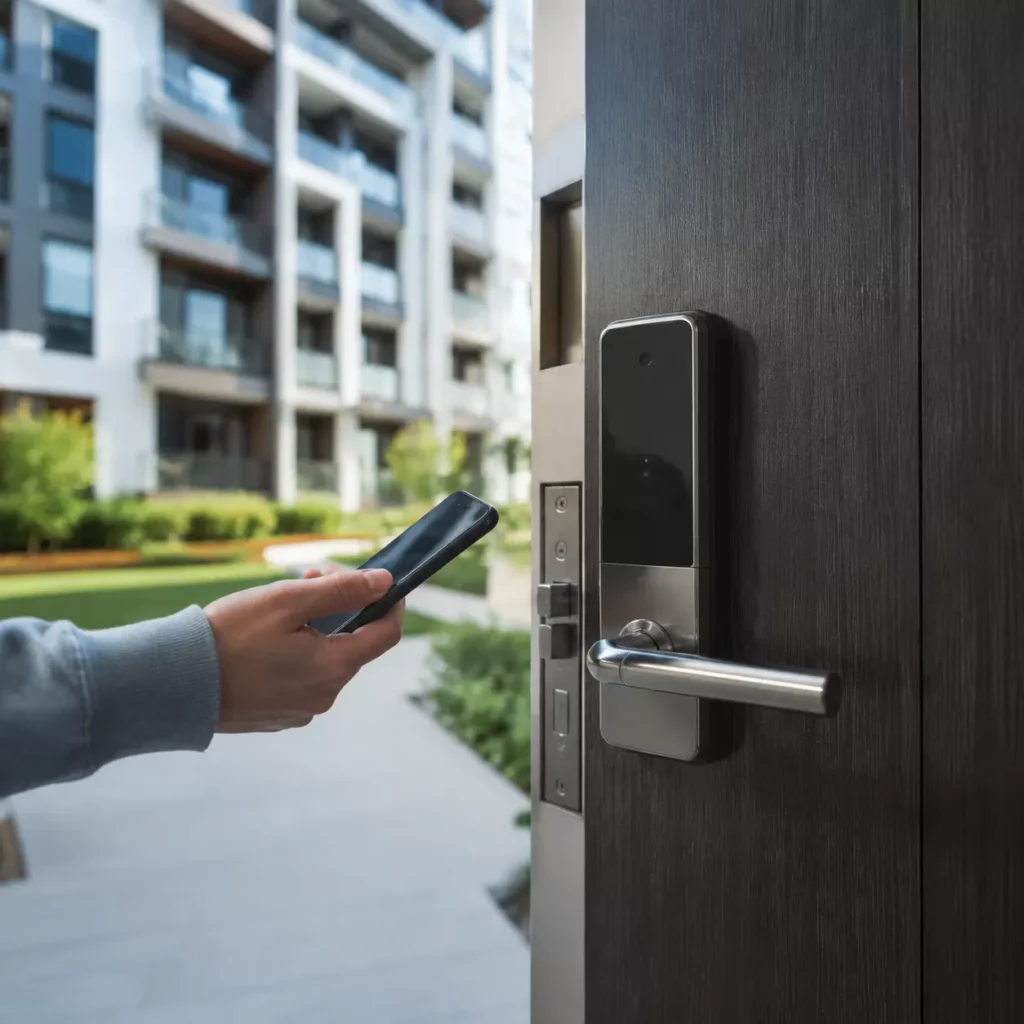
Single-Family vs. Multifamily Smart Locks: The Critical Differences
When managing a whole building, you cannot just buy consumer-grade hardware from a local home improvement store. Single-family smart locks are built for low-traffic, isolated use. In contrast, a robust multifamily keyless entry system must handle hundreds of daily cycles, complex user permissions, and constant data syncing.
The User-Tier Matrix: Managing Access for Teams, Residents, and Vendors
Property managers handle a rotating door of residents, maintenance staff, and external vendors. A residential lock cannot differentiate between these roles safely. We design our hardware to support a sophisticated multi-tiered access matrix:
| User Tier | Access Type | Primary Needs |
|---|---|---|
| Property Managers & Teams | Full Master Control | Universal access, real-time audit trails, emergency overrides. |
| Residents | Private Unit & Common Area | Secure smart reader credentials, simple sharing for guests. |
| Vendors & Maintenance | Temporary / Scheduled | Time-bound PINs or mobile keys that expire automatically. |
Credential Scalability: Moving from Bluetooth to Cloud-Synchronized Systems
Relying on localized Bluetooth requires staff to stand right next to a door to change codes or download logs. This is impossible to manage at scale.
True multi-tenant property technology (PropTech) relies on cloud-based access control. By upgrading from localized Bluetooth to cloud-synchronized infrastructure, property managers can handle tenant turnover automation instantly from a centralized access dashboard. When a lease ends, permissions revoke automatically across the entire property without anyone touching the physical door. This is the foundation of the best smart lock for apartment building deployments.
Core Evaluation Pillars: Physical & Compliance Standards
When choosing the best smart lock for apartment building projects, physical security and legal compliance are non-negotiable. Multifamily properties experience massive foot traffic, meaning residential-grade hardware simply won\’t hold up. We build our hardware to meet strict structural and safety standards, ensuring every entry point protects your investment and your residents.
Fire Code Ratings: The Necessity of UL-Listed Hardware
Safety is our absolute priority. Any lock installed on a fire-rated apartment door must maintain the integrity of that barrier during an emergency.
- Life Safety Compliance: Our commercial smart locks carry strict UL certifications, ensuring they withstand intense heat and prevent fire from spreading between units.
- Panic Hardware Rules: Single-action egress functionality ensures residents can exit instantly during an emergency without fumbling with knobs or switches.
Hardware Durability: ANSI/BHMA Grade 1 vs. Grade 2
We engineering our locking mechanisms to withstand constant daily use. Choosing the right commercial grade prevents premature hardware failure and cuts down on maintenance tickets.
| Specification | Grade 1 Commercial | Grade 2 Commercial |
|---|---|---|
| Cycle Testing | 1,000,000+ cycles | 400,000+ cycles |
| Best Used For | Main perimeters, high-traffic amenities | Individual resident apartment doors |
| Security Level | Maximum heavy-duty protection | Standard commercial-grade protection |
Door Dimensions: Backset and Bore Hole Geometry
A major headache during a multifamily keyless entry upgrade is realizing the new hardware doesn\’t fit the existing doors. Standardizing your measurements saves time and money.
- Backset Measurements: Confirm whether your doors require a 2-3/8 inch or 2-3/4 inch backset.
- Bore Hole Compatibility: Check the cross-bore diameter and thickness of your doors. If you are ordering through our smart door key lock wholesale program, we provide customizable latch and mortise options to ensure a perfect fit without extensive door modifications.
Weather and Corrosion Resistance: IP65+ Protection
Exterior gates, courtyard entries, and garden-style apartment corridors face harsh environmental elements.
- Dust and Water Shielding: Look for an IP65 or higher weatherproof rating to protect internal circuitry against heavy rain, dust, and humidity.
- Premium Finishes: Rust-resistant coatings prevent cosmetic and mechanical degradation caused by salt air or extreme temperature swings.
Software Ecosystem and Operational Integration
Property Management Software (PMS) Integration
A smart lock for apartment building operations cannot live on an island. To truly automate tenant turnover and daily workflows, our hardware features deep property management software integration with industry leaders like RealPage, Yardi, and Entrata. When a lease is signed or terminated, the cloud-based access control system automatically issues or revokes digital keys. This eliminates manual data entry, reduces administrative overhead, and ensures your multi-tenant property technology (PropTech) ecosystem runs flawlessly.
Centralized Access Control Dashboards
Managing a large multifamily property requires bird\’s-eye visibility. Our centralized access dashboard gives property managers real-time control over every entry point across the portfolio.
- Audit Trails & Access Logs: Track exactly who entered which unit and when, enhancing community security.
- Smart Lock Battery Lifecycle Management: Receive proactive alerts well before a battery dies, allowing maintenance teams to schedule replacements efficiently.
- Remote Management: Issue instant guest codes, lock down common areas, and handle lockouts from any smartphone or browser.
Online vs. Offline Functionality
Reliable connectivity is non-negotiable for the best smart lock for apartment building deployments. While cloud synchronization powers real-time updates, our locks do not rely solely on an active internet connection. Thanks to an intelligent local cache, the hardware stores user permissions directly on the device. If the building experiences a Wi-Fi outage, residents can still seamlessly unlock their doors using their mobile credentials or physical backups without a second of downtime.
For properties looking to unify their entire access footprint, pairing these smart entrance systems with high-security peripheral hardware—such as specialized floor-mounted door stops—ensures long-term structural protection alongside advanced digital security.
Choosing the Right Smart Reader Credentials for Your Residents
Selecting the best smart lock for apartment building deployments means balancing resident convenience with absolute property security. Modern multifamily keyless entry relies on flexible, secure, and scalable smart reader credentials that accommodate every type of tenant, visitor, and staff member.
Mobile App & Wearable Access
Digital keys represent the pinnacle of modern property technology. Residents can unlock entry points using smartphones or smartwatches via Bluetooth or NFC.
- Instant Provisioning: Grant or revoke access immediately upon lease signing or move-out, driving seamless tenant turnover automation.
- Touchless Entry: Frictionless access for residents carrying groceries or luggage.
- Visitor Management: Residents can issue temporary digital keys to guests directly from their mobile apps.
Physical Smart Backup
While mobile credentials are the standard, properties require physical backups to remain fully accessible to all demographics.
| Credential Type | Best Used For | Primary Benefit |
|---|---|---|
| Encrypted Keyfobs & Cards | Children, seniors, and property staff | Highly secure, RFID-backed, easy to re-program if lost. |
| Touchscreen PIN Codes | Maintenance teams and dog walkers | Eliminates the need for physical assets; easy to cycle for security. |
Mechanical Master Overrides
No electronic system should exist without a physical failsafe. Essential mechanical master overrides utilize heavy-duty physical cylinders, ensuring that property managers and emergency services can gain manual access during catastrophic building events. As an experienced electronic door lock factory, we engineer our smart locks with hidden physical keyways to maintain a clean aesthetic without compromising on emergency fallback requirements.
Smart Deployment: Retrofit vs. Full Deadbolt Replacement
When upgrading to a multifamily keyless entry system, property owners face a critical choice: modify what is already there or rip it out and start fresh. Both paths lead to a modern, cloud-based access control setup, but the upfront labor, costs, and structural impact vary wildly.
The Retrofit Approach: Upgrading Inner Mechanisms
The retrofit strategy focuses on upgrading the interior mechanics of the door while keeping the existing physical cylinders and keys intact. This is highly effective for properties looking to add smart functionality without altering the building\’s exterior aesthetic or replacing expensive architectural hardware.
- Cost Efficiency: Minimizes hardware expenses since you only replace the internal components.
- Aesthetic Continuity: Exterior door handles and keyways remain completely unchanged, preserving historical or uniform property designs.
- Master Key Preservation: Existing physical master key systems continue to work seamlessly as a manual backup.
- Fast Installation: Speed up deployment times, allowing maintenance teams to convert units quickly with minimal disruption to residents.
Full Commercial Mortise/Deadbolt Replacements
For properties requiring maximum physical security, installing a heavy-duty best smart lock for apartment building applications means opting for a full hardware replacement. This involves removing the old lockset entirely and installing a brand-new, unified smart commercial mortise lock or deadbolt from scratch.
| Feature | Retrofit Approach | Full Commercial Replacement |
|---|---|---|
| Hardware Impact | Reuses existing exterior cylinders & keys | Replaces all internal and external hardware |
| Security Level | Tied to existing door prep and lock strength | Maximum protection via integrated commercial grading |
| Installation Time | 10–15 minutes per door | 30–45 minutes per door (may require drilling) |
| Ideal For | Quick tech upgrades, budget-conscious retrofits | New construction, severe wear-and-tear, old broken locks |
If your project demands premium durability, switching to complete commercial door smart locks ensures that both the physical locking chassis and the cloud-based electronic access control components are perfectly engineered to work together. This elimination of mismatched components drastically reduces long-term maintenance tickets and hardware failures.
Why Gove is the Trusted Hardware Partner for Smart Apartment Deployments
Choosing the best smart lock for apartment building projects requires balancing heavy-duty physical security with modern digital architecture. As an established smart lock manufacturer and supplier, we engineer premium hardware specifically designed to handle the high-traffic demands of multi-tenant properties.
Manufacturer Precision: Physical Security Meets Cloud Compatibility
We build our commercial hardware from the ground up to support modern cloud-based access control workflows. Instead of layering software onto fragile consumer-grade locks, our manufacturing process integrates enterprise-grade circuitry directly into ruggedized lock bodies.
| Feature | Gove Commercial Hardware Standards |
|---|---|
| Physical Security | Grade 1 & Grade 2 heavy-duty options |
| Connectivity | Localized cache + Cloud synchronization |
| Integration | Native API-forward architecture |
| Production | Full OEM lock manufacturing capabilities |
Tailored Architectural Options for Multifamily Aesthetics
Modern multifamily keyless entry systems should elevate property curbing appeal, not detract from it. We provide property managers and developers with tailored architectural finishes—ranging from matte black to satin nickel—ensuring your digital security hardware matches contemporary interior and exterior design trends.
Scalable Supply Chain Ecosystem
We streamline large-scale property rollouts through wholesale architectural support and direct API integration. Our supply chain is built to handle bulk orders seamlessly, offering developers a reliable pipeline for comprehensive multi-tenant property technology (PropTech) deployments. Whether you are looking for specific smart key lock solutions or custom hardware configurations, we deliver scalable supply chains that keep your construction or retrofit timeline strictly on track.
Frequently Asked Questions (FAQs)
Can smart locks integrate with my existing Property Management Software (PMS)?
Yes. True property management software integration is a core requirement for modern multifamily housing. Our systems seamlessly sync with major platforms like RealPage, Yardi, and Entrata. This integration allows property managers to achieve complete tenant turnover automation, automatically issuing or revoking smart reader credentials when leases start or end, without manual dashboard entry.
What happens to apartment smart locks if the building loses power or Wi-Fi?
The locks continue to work perfectly. Our hardware features an offline local cache that stores access permissions directly on the device. Residents can still use their mobile credentials, PIN codes, or physical fobs during an outage. For absolute peace of mind, every lock also includes a master key override via a physical cylinder, ensuring backup entry options are always available.
How do property managers handle smart lock battery lifecycle management?
Battery maintenance is managed proactively through a centralized access dashboard. The locks transmit real-time battery status alerts long before low power becomes an issue. When sourcing replacement components, working with a reliable smart lock aftermarket parts supplier ensures you have quick access to high-quality power modules and hardware pieces to keep your building running smoothly.
Are smart locks compliant with commercial fire ratings and local building codes?
Absolutely. When selecting the best smart lock for apartment building safety, compliance is non-negotiable. Our commercial-grade hardware carries a certified commercial fire rating (UL listed) and meets strict ANSI/BHMA durability standards. This ensures full alignment with local building codes, life-safety regulations, and heavy-use multifamily requirements.