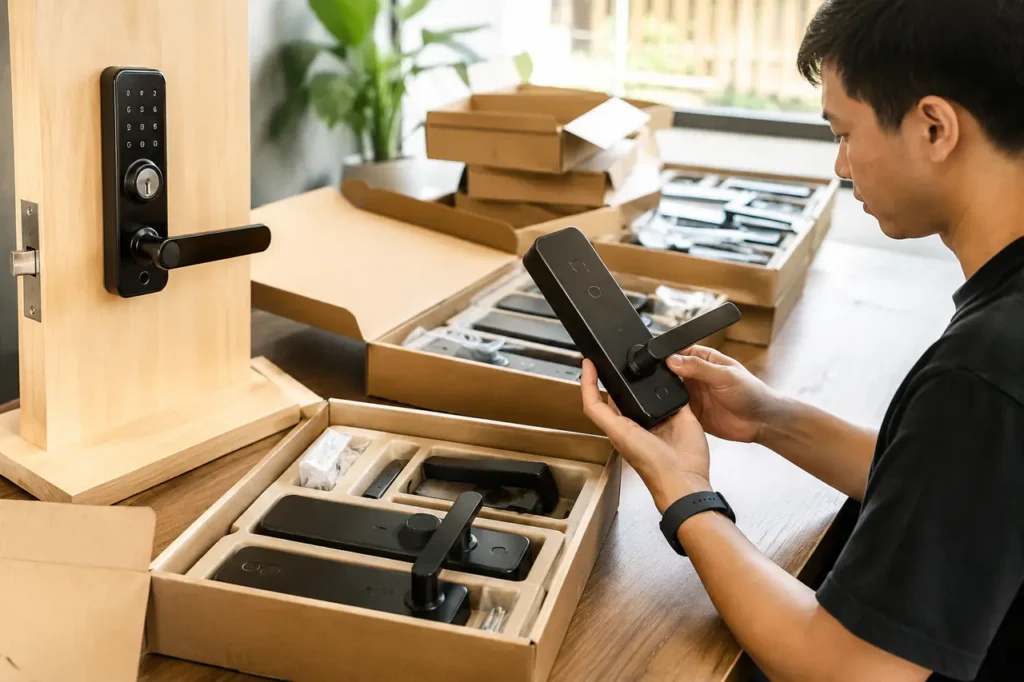
Balancing individual tenant convenience with building-wide security creates friction when selecting door hardware. Sourcing hardware from a reliable apartment smart lock supplier addresses these distinct demands, whether you are retrofitting a single rented unit or deploying keyless credentials across a multi-family complex.
Renters need non-destructive smart locks that preserve the exterior keyway to protect their lease compliance and security deposit. Property managers need commercial-grade durability, master key overrides, and centralized access software that simplifies tenant turnover across hundreds of doors.
Single-Unit Upgrades vs. Building-Wide Access Control
Choosing access control hardware requires defining operational scope. A solution designed for a single apartment unit rarely scales across a commercial multi-tenant property, while enterprise access platforms are often unnecessary for individual renters.
Use the operating scope to guide the shortlist.
- Single rented unit: interior retrofit lock that preserves the exterior keyway.
- Multi-tenant building: full replacement locks with centralized software.
- Owner-occupied apartment: either retrofit or full replacement after door prep review.
The Renter’s Constraint: Non-Destructive Hardware
Renters operate under strict lease restrictions that forbid permanent alterations to door frames or exterior locksets. Replacing the outer cylinder breaks building master key systems, leaving property owners without emergency maintenance access.
For single-unit upgrades, the lock mechanism must attach to the interior side of the existing deadbolt. This keeps the original exterior keyhole intact while adding keyless app control inside the apartment.
The Landlord’s Constraint: Centralized System Scale
Property managers face high operational overhead when managing physical brass keys.
- Tenant turnover forces frequent cylinder rekeying.
- Lost key fobs and contractor handoffs create access risk.
- Physical key tracking does not produce a reliable audit trail.
Enterprise deployments rely on unified software dashboards. Sourcing hardware for a full complex means evaluating credentials, battery lifespan, and gateway range rather than individual lock features alone. For large developments, partnering with a specialized smart lock for apartment buildings provider ensures hardware matches software requirements.
Top Apartment Smart Lock Brands and Systems Compared
Comparing commercial and consumer access systems helps buyers match lock hardware to specific property conditions and management goals.
| Brand / Model | Target User | Installation Type | Property Management Software (PMS) | Primary Connectivity |
|---|---|---|---|---|
| August Wi-Fi Smart Lock | Individual Renter | Interior Retrofit | No direct integration | Wi-Fi (2.4 GHz), Bluetooth |
| Yale Assure Lock 2 Retrofit | Renter & Landlord | Interior Retrofit | Limited partner API | Bluetooth, Z-Wave, Wi-Fi |
| Schlage Encode Plus | Property Manager | Full Lock Replacement | Yardi, RealPage, Entrata | Wi-Fi, Thread, Apple Home Key |
| Gove Commercial Multi-Tenant System | Property Manager / OEM | Full Commercial Mortise / Deadbolt | Native Enterprise Cloud / Open API | Bluetooth, Gateway Wi-Fi, RFID |
| SwitchBot Lock | Individual Renter | Adhesive Interior Retrofit | No direct integration | Bluetooth, Matter (via Hub) |
Base the shortlist on the management layer you actually control.
- Renters: use the table to confirm retrofit fit and no exterior modification.
- Landlords: require property management software integration and remote credential management.
- Large operators or OEMs: request API documentation and bulk hardware schedules before comparing quotes.
Consumer retrofit options like August and SwitchBot prioritize rapid, tool-free installation for single doors. They allow tenants to keep existing keys but lack the multi-door dashboard controls needed for property portfolios.
Commercial locksets from Schlage and Gove require full hardware installation but deliver essential enterprise features. These include remote credential revocation, detailed audit logs, and integration with property management software platforms.
Renter-Friendly Solutions: Retrofit and Non-Destructive Locks
Retrofit smart locks upgrade standard deadbolts without altering the door exterior. These models replace only the interior thumb-turn assembly, keeping the original tailpiece and exterior lock cylinder intact.
August Smart Lock Series
August smart locks attach to the existing deadbolt backplate using custom mounting adapters. The original key still operates the exterior lock, allowing landlords to maintain traditional master key access.
Installation requires only a screwdriver and takes less than ten minutes. However, property managers should note that internal battery replacement falls on the tenant, and Wi-Fi bridging requires an active indoor power outlet.
SwitchBot and Key-Turning Alternatives
Adhesive motor units fit directly over the existing interior thumb-turn without unscrewing hardware. These systems turn the key or thumb-turn mechanically when triggered by a smartphone app.
These units work well on non-standard residential doors where deadbolt mounting screws do not match standard spacing.
- Mechanical motor noise is higher than direct-drive motorized locks.
- Adhesive mounting requires surface prep and cleanup before move-out.
- Remote access depends on an optional Matter hub or Bluetooth bridge.
Yale Assure Retrofit Options
Yale offers modular retrofit smart locks that support interchangeable network modules. Tenants can start with Bluetooth control and later upgrade to Z-Wave or Wi-Fi smart home hubs.
This modular hardware appeals to long-term renters who want flexible smart home integration without replacing their apartment’s standard exterior hardware.
Before purchasing any retrofit lock unit, tenants should verify the following door measurements:
- Deadbolt Backset: Confirm standard 2-3/8 inch (60 mm) or 2-3/4 inch (70 mm) spacing.
- Thumb-Turn Clearance: Ensure the interior trim panel has at least 2 inches of flat clearance around the thumb-turn.
- Tailpiece Compatibility: Verify whether the existing lock tailpiece is flat, D-shaped, or square.
- Door Thickness: Verify the apartment door slab is 1-3/8 in to 1-3/4 in thick for standard lock fitment.
Property Manager Solutions: Multi-Tenant Access Systems
Commercial access control systems replace physical keys with digital PIN codes, RFID key fobs, or mobile Bluetooth credentials across entire property portfolios.
High-Turnover Keyless Management
Tenant turnover creates significant labor and hardware expenses under traditional lock systems. Re-keying cylinders or cutting new physical keys for every move-out costs time and money.
Smart multi-tenant systems resolve turnover overhead by resetting door access instantly through software. When a tenant lease expires, management revokes digital credentials automatically without visiting the physical unit door.
Centralized Access Dashboards
Centralized software management gives site staff a single browser dashboard for lock status, battery levels, and access events.
- Remote credential revocation during tenant move-out.
- Temporary time-bound PIN codes for contractor and maintenance access.
- Audit logs for access disputes and liability records.
When sourcing equipment, property managers should evaluate smart door lock supplier options based on API open integration capabilities. Connecting lock software directly with platforms like Yardi or Entrata automates credential generation during tenant onboarding.
Leading Hardware: Schlage Encode & Enterprise Partners
High-density residential buildings require commercial-grade lock bodies that withstand heavy daily usage. Full lockset replacements feature heavy-duty mortise or latch mechanisms tested to Grade 1 or Grade 2 security standards.
Working with an experienced China smart lock security door supplier allows property developers to order bulk locksets pre-configured for multi-tenant door schedules, lowering overall hardware procurement costs.
Key Procurement Factors for Multi-Tenant Deployments
Procuring commercial smart locks for large residential projects involves technical constraints beyond consumer features. Sourcing managers must evaluate compliance, bulk logistics, and maintenance protocols before committing to a supplier purchase order.
Procurement Verification Checklist
Confirm each factor below in writing before placing a bulk order.
- Fire Code & Life Safety Compliance
- UL 10C 3-hour fire rating on fire-rated corridor doors.
- ANSI/BHMA Grade 1 or 2 hardware certification.
- Single-motion egress for emergency exit without separate unlatch actions.
- Connectivity Infrastructure
- Building-wide Wi-Fi increases lock battery consumption.
- Z-Wave/Zigbee mesh networks preserve battery life but require corridor gateways.
- Cellular gateways suit distributed properties without reliable building Wi-Fi.
- Emergency Power & Mechanical Overrides
- External 9V or USB-C power contacts for dead battery lockouts.
- Physical master key override on every unit door.
- Fail-safe or fail-secure behavior confirmed against the fire plan.
- Bulk Pricing & Minimum Order Quantities (MOQ)
- Request tier pricing at 50, 100, and 500 unit thresholds.
- Carry a 3-5% spare unit buffer for immediate replacement during turnover.
- Hardware Warranties & Spare Part Availability
- Mechanical components: 3-5 years written warranty.
- Electronic circuit boards: 1-3 years written warranty.
- Confirm individual levers, backplates, and solenoids can be ordered separately.
Evaluating these procurement factors early prevents installation delays and avoids costly retrofitting when building inspectors perform final compliance audits. Reviewing choices with a proven choose smart locks for apartment buildings partner ensures technical specifications meet local building standards.
Final Compliance Checks Before Ordering Your Smart Locks
Before issuing a purchase order or installing individual hardware, complete final verification checks to protect lease rights and building compliance.
For Individual Renters
- Obtain written lease clarification or landlord permission before mounting hardware.
- Store original interior thumb-turn hardware in a safe place for re-installation upon move-out.
- Verify that 2.4 GHz Wi-Fi signals reach the interior front door frame reliably.
For Property Managers and Buyers
- Cross-reference door thickness (standard 1-3/8 inch to 1-3/4 inch) and backset dimensions against the supplier’s door preparation template.
- Confirm ADA lever compliance on all public, common area, and residential unit doors.
- Verify software licensing fees per unit/month to calculate long-term operating expenses accurately.
Aligning door prep specifications and software requirements before purchasing reduces sourcing risks for property developments of any scale. To evaluate enterprise hardware options, review certified product schedules or consult with a trusted specialized manufacturer like Gove to request hardware samples and custom quote terms.