
3D face recognition door locks are most useful when your hands are full, your face is covered only occasionally, and you still want dependable backup entry.
A parent carrying groceries may value hands-free unlocking more than another keypad feature, while an apartment owner may care more about mortise compatibility and installation limits.
How 3D Facial Recognition Beats Standard Smart Locks
A 3D face recognition lock uses infrared sensing to read the depth and contours of your face.
Instead of matching a flat photograph, it builds a three-dimensional facial map and checks that map before releasing the lock. The result is contactless entry without reaching for a phone, key, or fingerprint sensor.
That convenience matters in real use. A fingerprint reader can struggle when your fingers are wet, dirty, or covered. A keypad still requires you to stop and enter a code.
Face recognition can be quicker when you arrive with a child in one arm and shopping bags in the other.
Why a flat photo is not enough
Basic camera-based recognition can be vulnerable to poor lighting or simple image spoofing. A properly designed 3D lock uses infrared depth information to distinguish a real face from a flat photograph or ordinary video displayed on a screen.
Marketing language still needs careful reading. “Face recognition” does not automatically prove strong anti-spoofing performance. Look for specific references to 3D infrared sensing, depth mapping, liveness detection, or anti-spoofing protection rather than relying on the feature name alone.
- 2D camera recognition: Uses visible images and may depend heavily on lighting and camera quality.
- 3D infrared sensing: Reads facial depth and contours, allowing the lock to check more than appearance.
- Fingerprint access: Useful backup entry, but less convenient with wet, dirty, gloved, or injured fingers.
- Keypad access: Practical for guests, but codes can be observed, shared, or forgotten.
- Mechanical key access: Independent of the battery and electronics, although it requires carrying and managing a physical key.
Why infrared helps at night
Infrared sensing does not depend on a brightly lit porch in the same way a standard optical camera does.
A good system can identify facial contours in a dark corridor or shaded entryway, although direct sunlight, rain, hats, masks, and unusual positioning can still affect recognition.
For a home where nighttime entry is common, this is one of the strongest reasons to consider a biometric smart deadbolt with 3D sensing.
It removes the need to install brighter lighting simply to make the lock usable, but it should not replace sensible exterior lighting for general safety.
Key Features to Compare Before You Buy
The best face ID locks combine fast sensing with dependable backup access and clear battery warnings. A premium sensor is not much help if the lock cannot be opened when your face is covered or the batteries are nearly empty.
Backup entry should be part of the main decision
Facial recognition is convenient, not universal. Sunglasses, a wide-brimmed hat, a mask, heavy rain, or a changed appearance may require another entry method. A well-designed keyless entry system should give every household member a practical alternative.
- Fingerprint reader: A fast option for residents who prefer touch access or whose face may not be visible.
- PIN keypad: Useful for guests, cleaners, dog walkers, and family members who do not want biometric enrollment.
- Mechanical key: Provides a fully independent fallback when electronics fail.
- Smartphone app: Helpful for remote access, temporary codes, activity records, and checking lock status.
- Access cards or tags: Convenient for children or visitors who may not use the app.
Do not count every advertised method as equally useful. An app may require a working phone and connection, while a PIN may be disabled by a privacy setting or forgotten. Decide which two backup methods your household would actually use.
Battery management matters more than a headline runtime
Battery life varies with face scans, Wi-Fi activity, automatic locking, temperature, and daily traffic. Some residential locks may run for six months or longer under typical conditions, but the published figure should be treated as a usage estimate rather than a guarantee.
The important features are low-battery alerts, a visible battery indicator, easy battery replacement, and an exterior emergency power connection.
A USB-C jumpstart port lets you temporarily power the lock from a power bank when the internal batteries are depleted. Some models use another emergency power standard, so check the actual product instructions.
- Confirm whether the lock sends low-battery alerts through the keypad, app, or both.
- Check whether batteries can be replaced from inside the home without removing the lock.
- Keep a charged power bank available if the model uses USB-C emergency power.
- Ask whether automatic locking increases battery use in your household.
- Confirm that the emergency port remains accessible when the door is closed.
Connectivity can change the ownership experience
Bluetooth may be enough for local unlocking and setup, but remote control normally requires Wi-Fi or a compatible bridge. Native Wi-Fi can simplify installation, while Bluetooth-based systems may use less power and offer a simpler local connection.
Check compatibility with the smart home platform you already use. Apple Home, Google Home, and Alexa support can vary by model, region, firmware version, and required hub. Do not assume that a lock with a smartphone app will automatically work with every voice assistant.
- Native Wi-Fi or Bluetooth-only operation
- Bridge or hub requirement
- Apple Home, Google Home, or Alexa compatibility
- Remote unlock and activity-history availability
- Subscription requirements for advanced features
Premium extras may include a digital door viewer, built-in camera, radar unlocking, palm-vein recognition, or automatic relocking. These features can be useful, but they also add sensors, software, and power demands. Buy them for a real household need, not because the specification sheet looks impressive.
Top 3D Face Recognition Smart Locks Compared
The category is expanding, but product differences are not always obvious from marketplace listings. The table below is a starting point for comparison. Confirm the current specifications, supported apps, door measurements, and regional availability before ordering.
| Brand and model | Lock type | Connection | Backup methods | Standout feature |
|---|---|---|---|---|
| Gove D 7800 | Confirm deadbolt or mortise configuration | Confirm Wi-Fi or Bluetooth setup | Face recognition, fingerprint, password, card, key | Multi-method residential access |
| Lockly Visage Zeno Series | Residential deadbolt-style option | Wi-Fi smart lock platform | Facial recognition, fingerprint, PIN, app, key | Radar-style hands-free unlocking and smart home features |
| SwitchBot Lock Vision Pro | Check retrofit or full-replacement configuration | Confirm hub and platform requirements | Face recognition, fingerprint, palm vein, app, key or PIN depending on package | Multiple biometric methods and camera-oriented features |
| Kaadas face recognition models | Often residential mortise-style options | Confirm Wi-Fi, Bluetooth, or hub | Face recognition, fingerprint, PIN, card, key depending on model | Mortise security and contactless entry |
| Primero P9 | Mortise-style configuration | Confirm direct Wi-Fi requirements | Face recognition, fingerprint, PIN, card, app, key depending on version | Digital door viewer on some configurations |
Lockly Visage Zeno Series
Lockly is a strong fit for buyers who want a polished residential deadbolt experience with facial recognition, radar-style approach detection, and broad connected-lock features. It suits homeowners who want hands-free entry without moving to a commercial access-control system.
The trade-off is that convenience features can make compatibility and setup more important. Check the existing deadbolt, exterior clearance, app requirements, and smart home platform support before treating it as a straightforward replacement.
SwitchBot Lock Vision Pro
SwitchBot appeals to buyers who want several biometric options rather than face recognition alone. Face, fingerprint, and palm-vein access can reduce the chance that one failed recognition method leaves the household inconvenienced.
It may be a better choice for a connected-home user already invested in the SwitchBot ecosystem. Verify whether the selected package includes the hub, whether the lock fits your door, and which features work locally when the internet is unavailable.
Kaadas and Primero: leading mortise options
Kaadas and Primero are worth considering when the door uses a residential mortise lock rather than a familiar U.S.-style cylindrical deadbolt. Their larger integrated hardware can combine the lock body, handle, face sensor, keypad, and viewer in one exterior design.
That integration can look cleaner, but mortise installation is less forgiving. Measurements must match the lock body, spindle, handle position, backset, and door edge preparation. Buyers with this door style should compare the hardware layout first, then compare facial recognition features.
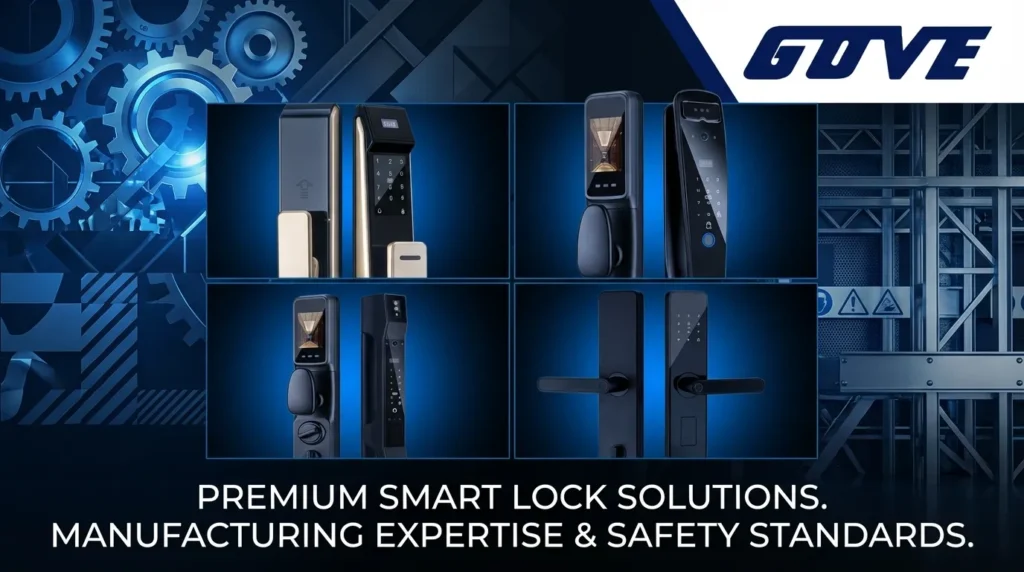
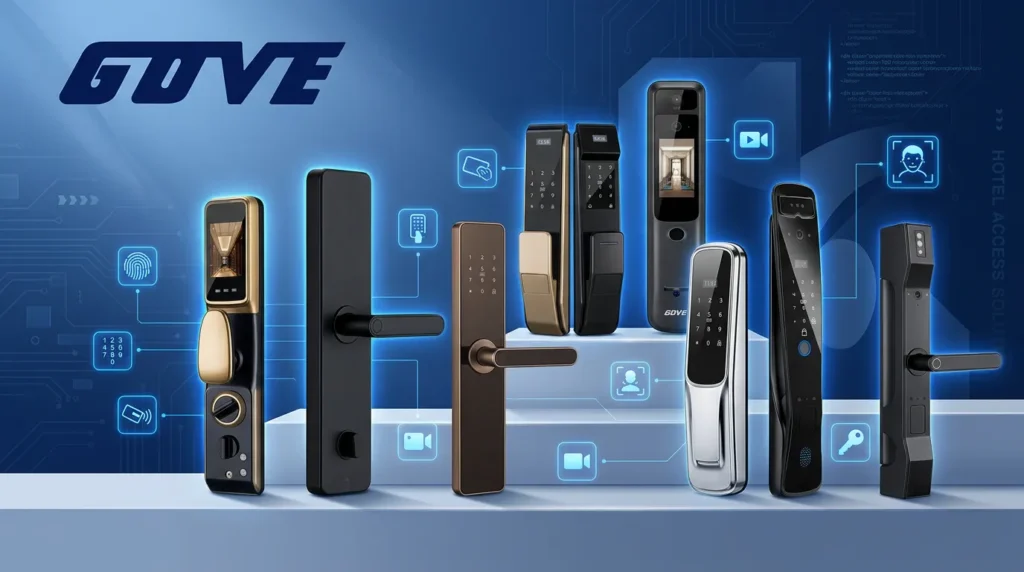
Gove buyers can review the Gove D 7800 Smart Door Lock Fingerprint Password Card Key 3d Face Recognition for a product-specific starting point.
If your door already uses a standard deadbolt, the Deadbolt Smart Door Lock category may be the more relevant place to compare compatible options.
Where cheaper models usually fail
Lower-priced locks can still be useful, especially for a secondary entrance, rental property, or buyer who mainly wants PIN and fingerprint access. The problem appears when the listing promises advanced facial recognition without explaining sensing range, dark-room performance, software support, or emergency entry.
- Face recognition may work only at a narrow distance or angle.
- The exterior housing may be poorly sealed against weather.
- Battery warnings may be limited to a small keypad indicator.
- App support may be unclear after a phone or router change.
- Mechanical keys, cards, or replacement batteries may be difficult to source.
The expensive mistake is paying for a premium sensor while ignoring the lock body. A well-fitting, well-supported lock with fewer extras is usually safer and less frustrating than an impressive-looking model that requires door modification.
Door Compatibility and Installation Checklist
Before buying a 3D facial recognition lock, verify the door thickness and current locking mechanism. Facial recognition hardware is often larger than a basic keypad, so both the lock body and the surrounding clearance must fit.
Deadbolt versus mortise
Most U.S. residential entry doors use a cylindrical deadbolt installed separately from the handle. Many international homes, apartments, and higher-end condos use a mortise lock, where the locking case is recessed inside the edge of the door and often includes the handle and latch.
These systems are not interchangeable. A lock advertised as a deadbolt replacement may not fit a mortise cutout, while a mortise lock may require different drilling, handle spacing, and door-edge dimensions.
Review the Gove S22 30 Door Lock Aluminum Handle With 5072 5058 Mortise Lock if your door uses an integrated mortise setup.
Measurements to take before ordering
- Measure the door thickness. Many standard residential doors fall around 1 3/8 to 2 inches, but specialty doors may need an extension kit.
- Identify deadbolt or mortise construction by examining the door edge and interior hardware.
- Measure the backset from the door edge to the center of the lock cylinder.
- Check the existing borehole, strike plate, latch, spindle, and handle spacing.
- Confirm whether the door swings inward or outward and whether the lock supports that orientation.
- Measure the space around the lock for the larger facial-recognition housing.
- Look for screen-door handles, trim, storm-door frames, or sidelights that could obstruct the sensor.
Installation mistakes that create false problems
A facial sensor can appear unreliable when the real issue is door alignment. If the latch rubs, the door sags, or the strike plate is off-center, motorized locking may become noisy, slow, or incomplete.
Test the existing door with the door open and closed before installing electronics.
- Do not assume the old holes match the new lock.
- Do not install the sensor where a porch roof, trim, or screen door blocks its view.
- Do not place the exterior unit where direct afternoon sun hits the sensor continuously.
- Do not skip user enrollment at the normal standing distance.
- Do not discard the mechanical key or emergency power instructions after installation.
For a standard deadbolt, installation may be manageable for a careful DIY homeowner. Mortise conversions and doors with unusual thickness, glass panels, or narrow trim are better candidates for a local smart home installer.
If you want to compare the door mechanism first, start with Gove’s compatible residential lock categories rather than choosing by face-recognition features alone.
Choose by household, not by feature count
- Busy families: Prioritize fast hands-free entry, fingerprint backup, automatic locking, and simple user enrollment.
- Apartment or condo owners: Confirm mortise dimensions, building rules, door-side clearance, and whether exterior hardware changes are permitted.
- Older children or guests: Choose a dependable PIN or card option instead of relying only on facial enrollment.
- Smart home users: Check native platform support, hub requirements, remote access, and local operation during internet outages.
- DIY installers: Favor a lock matching the existing deadbolt pattern and avoid unverified mortise modifications.
Frequently Asked Questions
Will a 3D face recognition lock work in the dark?
Yes, most systems using 3D infrared sensing are designed to read facial depth without relying on visible porch lighting. Recognition can still be affected by hats, masks, rain, glare, or an incorrect standing distance, so keep a fingerprint, PIN, or key available.
Can a photograph trick a facial recognition door lock?
A properly designed 3D system should reject a flat photograph because it checks depth and facial contours, not only a visible image. Look for explicit anti-spoofing or liveness-detection claims, and treat vague “AI face unlock” wording as a reason to investigate further.
What happens if the smart lock battery dies while I am outside?
Reputable residential models provide an emergency access method, such as an exterior USB-C jumpstart port powered by a portable battery, a mechanical keyhole, or both. Confirm the exact method before purchase and keep the required cable, power bank, or key accessible.